It’s 6:00 am on a Tuesday, on an unseasonably warm Colorado morning. My colleagues and I are sitting in our rental vehicle on a nondescript street somewhere outside Boulder. I think we’re in a town called Broomfield, but I’m not quite sure. It’s dark, and the light of a tri-level home glows from across the narrow, winding street.
I’m not sure when the tri-level was a thing, but all across the country, and especially in the Midwest suburbs I grew up in, there were tons of them. The short flights of stairs and half-floors seemed to be an architectural compromise between the the post-war ranch style of the 1940’s and the colonial revivals of the 1960’s. While the style dubiously blurred the lines between upstairs and downstairs, I have many fond memories of them back when kids where still unsupervised. I specifically remember stacking pillows and couch cushions, and launching myself from the top of the stairs, only to be caught mid-air by my friend's father. I wasn’t allowed back over for some time. But we’re not here to talk architecture. We’re here to meet a guy named Jason, who I’ve not seen in over 30 years. Jason and I grew up in Southeastern Michigan, on the very same street.

Jason knows a thing or two about avalanches, and as the head of our industrial design team at Rivian, that’s important to me. I’ve dragged my new recruit, Christian, along with me to learn the importance of conducting in-field research. It’s a major part of our process and integral to how we solve problems. It’s also a great way to get to learn about the people and lifestyles we’re interested in serving.

Jason greets us at the door, and while I've only seen or talked to him a couple of times since 1987, he’s exactly as I remember him — despite a mildly receding hairline, which is okay because I’m not doing stellar up there either. The smell of fresh coffee fills the air, and we’re welcomed by Jason’s wife and dog, who don’t miss a beat despite the fact I’m standing there with a couple of strangers, one of which is holding a large camera. After a few introductions, locally made granola bars are distributed, and we get to business. I contacted Jason after seeing some Facebook pictures of him and his wife backcountry skiing — an activity I’ve had limited experience with. We’re here to spend the day outdoors with them to learn how a vehicle can support their active lifestyle.

THE PRE-SKI MORNING CHECKLIST
The world of backcountry skiing has seen exponential growth over the last few years, propelled by new technology in skis, avalanche beacons and weather forecasting. The ever-growing popularity of traditional snow sports has also led many skiers and snowboarders to seek out new experiences outside the confines of established resorts, to places where lift lines don’t exist.
Jason, an engineer, who works for Yeti Cycles, and his wife, Deb, an attorney, are both avid skiers and have completed the AIARE 1 training course — necessary for anyone who plans to recreate in avalanche terrain. Their laptop is open on the kitchen table, and we check out an avalanche forecast site that offers up-to-date information about key backcountry locations. The scale rates the risk of avalanche by number (from 1 to 5) and color (from green to black). Today, our destinations score a 2/yellow for moderate risk. Jason says this is pretty normal. He’s never seen the lowest risk rating, and most areas are frequently marked 2 or higher.

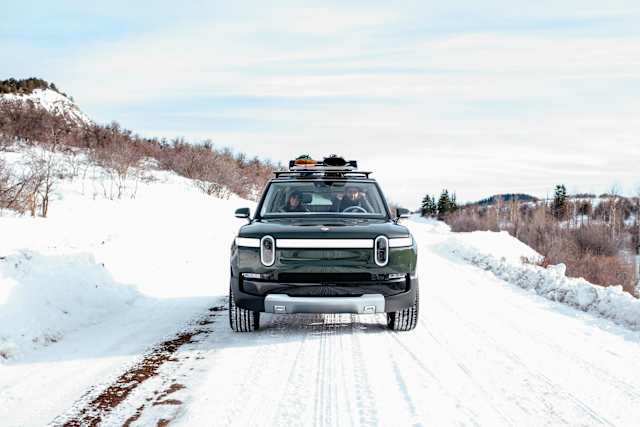
Once conditions are deemed safe, we head to the garage to prep. Jason’s garage is by no means a place to store cars, but a loft dedicated to sports and gear. Yeti mountain bikes, all types of skis, backpacking gear, snowshoes and climbing ropes are neatly displayed on shelves. While Jason collects avalanche beacons and backpacks, we chat about the merits of scented ski wax — an area in which I argue the ski wax market is deficient — then we quickly pack our gear and load it into a rooftop carrier on Jason’s car for a number of reasons, one of which is security. We set off.

During the drive to our trailhead, Mayflower Gulch, Jason speaks at length about his love of the outdoors and his decision to leave a cushy job to move west and focus on what’s important. At the ripe age of 25, Jason found himself in a cubicle farm of a Michigan-based defense company, pondering his future. Feeling like he was 25-going-on-50, he didn’t see a way out, or even a way to enjoy life more, on that trajectory. All it took was a little savings and an open invite from a friend in Denver to provoke Jason to make the leap, and soon he found himself on a Boulder, Colorado couch.
With a density of people who love the outdoors and his proximity to all kinds of adventure, the area was perfect for him. Jason spent his first few months learning about sports he didn’t have access to before, such as climbing, downhill mountain biking and, of course, backcountry skiing. All these activities can have some sort of barrier to entry, and in the case of climbing or backcountry skiing, require specific knowledge and a partner. With a few initial connections, he found himself immersed in a community of people who not only loved the outdoors, but also leveraged every season to get the most out of it. In no time, Jason was at home in his new world and the quality of life that it encouraged.

As we drove up the canyon on our way to I-70, the freeway that connects the greater Denver area with the surrounding resorts and skiable terrain, there is one familiar winter sight absent from our drive: snow. This has been the talk of the town, especially with a mountain economy that heavily relies on the stuff. With historically low snowfall that many say is the lowest in 80 years, our backcountry excursion is looking more like an grass-patched mess rather than a powder-filled dream. Despite these poor conditions, we’re committed — even though it means venturing into backcountry territory where Jason has never been and enlisting a local ski guide to lead the way.

Kyle, of Colorado Adventure Guides, is happy to show us the ropes in Summit County, Colorado. Summit County not only has great skiable terrain, it’s home to the population with the highest life expectancy in the United States. Must be the clean air, easy access to outdoor activities and abundance of craft beers on tap. Okay, maybe not the craft beers part. We meet at Kyle's office, and he takes us through the basics before we fuel up on breakfast burritos and head out. The planned destination is a small, roadside park at the base of Mayflower Gulch. Located only about 10 miles from Breckenridge’s city center, it's one of the few areas around with decent snow and low avalanche hazards.


UNLOAD AND GEAR UP
Upon arrival, we unload and start the all-too-familiar process of suiting up. We’ve studied this "gear-up" phase a lot. The act of getting your boots and pants on in-and-around the vehicle, among all of the other necessary tasks, has influenced the way our team designs products and makes decisions.
After managing through hassles associated with getting dressed inside a car, we’re standing in a roadside park with a guide who’s going to tell us everything about not getting killed by an avalanche.

Christian and I are veteran snowboarders, but we’re not here to snowboard, exactly. We’re here to ride strange, newly fangled contraptions called "splitboards." Splitboards are a hybrid product that allow riders to break the board into two parts, like skis, then quickly reassemble them into a unified board. The reason for this is so that when you’re in ski mode, you can slide around as if you were on a pair of cross-country skis. This is also the way you go up the hill when backcountry skiing. While I understood this fact in principle, I didn’t in practice. Unlike a pair of skis, the splitboard still uses traditional snowboard boots. Soft and wide, these boots are not ideal for adaptation to skis, and the nature of this strange board requires the user to put the right side of the board on the left foot and the left side of the board on the right foot. It’s like wearing your shoes on the wrong feet, but instead of shoes, you’ve got a 5-foot-long ski attached to it.

THE MOMENT WE’VE BEEN WAITING FOR
As we prepare to head out, our photographer, Erik, also a seasoned skier, dons dual backpacks filled with camera equipment. One on his chest and one on his back. He’s a neon-green, nylon-and-Cordura-covered, skiing camera store — and he’s stoked. We head out, shuffling along the trail, and the skis feel wide and cumbersome. I’m clueless to the terrain, distance or conditions we’ll see, but it’s sunny, and technically "I’m working," so I don’t care.

Within a few minutes, we’re in the woods and starting to climb at a slight grade. In no time, I start to feel it. Maybe it’s the elevation, or maybe it’s because I’m not outside as much as I should be, but that initial build-up of lactic acid is forming, and I know this is going to hurt tomorrow. We peel off hats and jackets, and continue to climb, stopping in a stand of pine trees at just the right time of day to catch golden light flood through the branches. Our guide checks in to see how we’re doing. Most of us are in decent shape, but the elevation and inexperience are taking their toll on us. After a rather long climb, we break through the trees to find ourselves in a large open expanse at the top of the hill, and we stop for a moment to take it all in.

At the peak of our first run, the snow is crusty and windblown. We dismount our skis, remove our skins and convert the contraptions to snowboard mode. The process takes just a few minutes, and we’re ready to head down. We drop in on a shadow-covered sloop, and despite the lack of fresh powder, there’s enough old snow to be found. Somewhere between the extra-wide stance of the board and crusty surface, I find it hard to navigate, and in seconds, I go down. I’m back up in a flash, and we all head down to the gully at the bottom. Before we know it, we’re trekking back up to the top, and I realize that backcountry skiing is way more work than I imagined.


We spend the morning ascending, descending and eating energy bars. The crew swaps adventure stories, and Kyle remarks that this is what backcountry skiing is all about. It’s not just about grinding it out for the most vertical drop possible, but, rather, it’s about enjoying time in the woods with friends. As the day rolls on and our energy diminishes, we take breaks more often to hydrate and snack. Kyle uses each one as an opportunity to teach us about the snow. He slices out large cross-sections of it to show us the layers while he speaks at length about crystalline structures and the causes of avalanches.

By late afternoon, we decide to make our way back to our vehicles, which, for Christian and me, is a long, arduous task. As we approach the vehicles, the sore legs, spent lungs and empty stomachs are impossible to ignore. We take some time to reflect on the day and do a few impromptu interviews inside Erik’s van. I look for Christian, but he’s sought refuge in the back of one of our vehicles — exhaustion has taken its toll.
THAT POST-OUTDOOR BUZZ
As sunset approaches, I start to see how the seven hours in the woods, for just a handful of runs, can appeal to the senses. This, like so many another sports, is not just about the activity itself, it’s about being in the elements. It’s about the people you’re with, the places they take you and the memories you make along the way.
This process of learning by experiencing these activities and moments first-hand, by truly understanding what’s important to the people who do this every day, not only helps us design better products, it makes us appreciate the world around us in a deeper way.