
A home charger makes charging your electric vehicle (EV) simple. After a day of errands and school runs, you plug in and wake up ready to go the next morning. It’s really that easy.
When choosing the best home EV charger, think about how far you usually drive and how long your car stays parked. If your trips are short, a Level 1 charger plugged into a standard outlet may be all you need. For faster charging, a Level 2 electrical car charger uses 240-volt power to add range quickly.
Once you have a sense of the speed you need, the next step is finding the charger that best fits your setup. This guide tells you what to consider when comparing chargers, including the power needed and what installation looks like.
What is a home EV charger, and what does it do?
A home charger safely supplies alternating current (AC) power to your EV. The car’s onboard charger then converts that AC into the direct current (DC) the battery uses. The vehicle controls how much power it accepts, within the limits of the charging equipment and your home’s electrical circuit.
For charging at home, there are two main options:
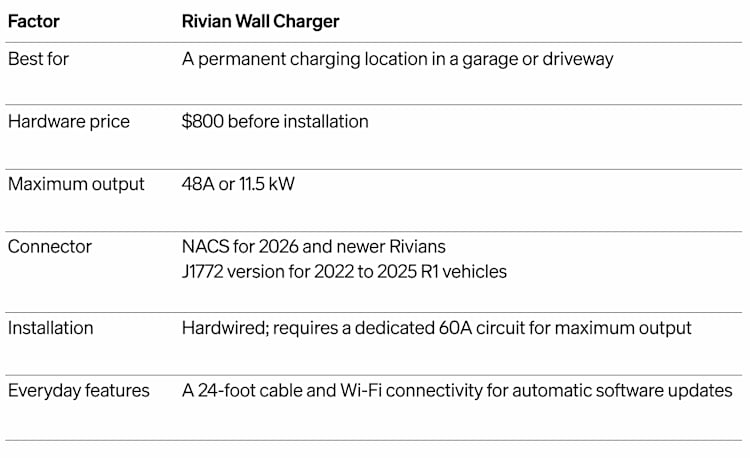
Rivian offers a hardwired Wall Charger, which delivers up to 48 amps (A), or 11.5 kilowatts (kW), on a dedicated 60A circuit.
What to look for in a home EV charger
Start with your vehicle. Every EV has a maximum AC charging rate — the maximum amount of power it can accept. If your car tops out at 7.2 kW, it won’t charge any faster even when plugged into an 11.5 kW charger. The charger can offer more power, but your vehicle determines how much it draws.
Chargers are described using amps and kilowatts. Amps measure the electrical current flowing, and kilowatts measure the amount of charging power delivered. With a 240-volt outlet, a 32A charger can supply power at a rate of 7.7 kW, while a 48A charger can deliver power at a rate of about 11.5 kW. Whichever charger you choose, your home’s electrical circuit needs to be able to support it.
You also need a plug that matches your vehicle. Rivian’s 2026 and newer models use the NACS connector. Rivian R1T and R1S models from 2022 to 2025 use a CCS1 inlet with J1772 for AC charging.
For a permanent spot in your garage or driveway, the Rivian Wall Charger offers the following:
When your vehicle and home support the full charging output, you can add driving range more quickly between trips. If they don’t, part of the charging capacity goes unused. That’s why it’s important to understand what your car can accept and what your electrical system can support.
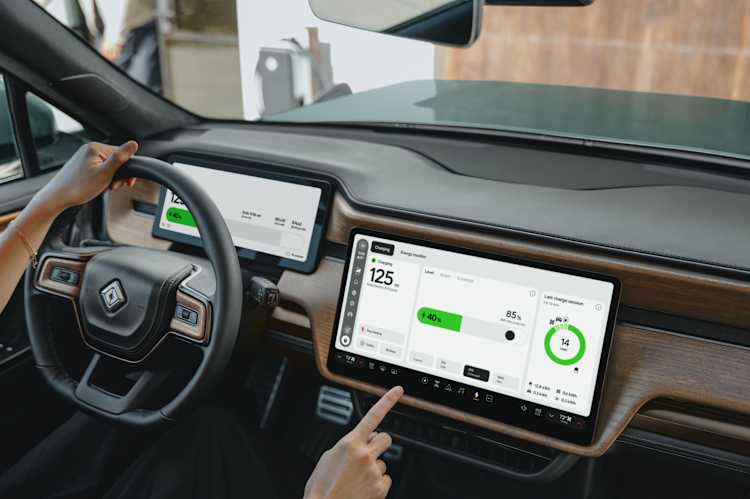
Next, look at the features that matter in everyday use. Many home chargers advertise scheduling as a premium feature, but Rivian owners can manage charging schedules directly through the vehicle and the Rivian app. That includes setting charging sessions to run during off-peak hours to take advantage of your utility’s lowest rates.
What matters is long-term reliability: The Rivian Wall Charger’s Wi-Fi connectivity enables automatic software updates. This keeps the hardware current without you having to think about it.
Then, there’s practicality. Even the best home charging stations are inconvenient if the cable barely reaches your car. Check that the charger connects easily from your usual parking spot. Look for proper safety certification and, if you’re installing a Level 2 charger outdoors, make sure the hardware can handle your local weather.
Home charging installation and ownership cost
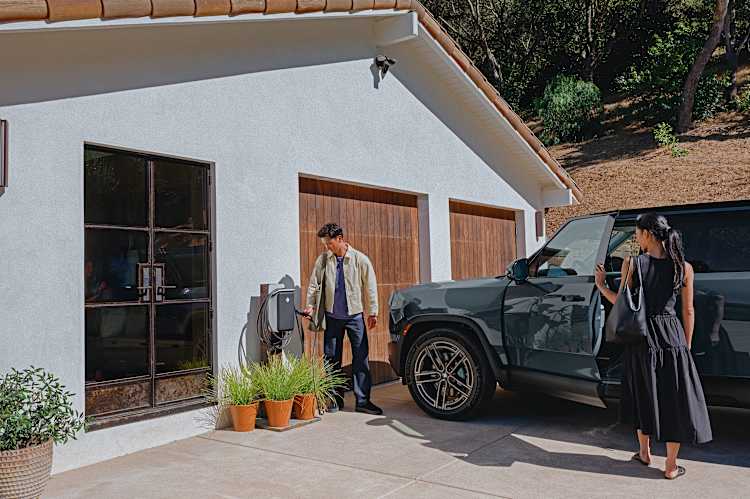
Rivian offers two NACS home charging options: the Portable Charger and the Wall Charger. Installation for the wall charger is extra and depends on your home electrical setup. An electrician may need to add wiring, upgrade the panel, or get permits, increasing the costs.
Factors that affect the cost of installation
Installation is generally cheaper when the charger is close to your electrical panel. Costs can increase when additional work is needed:
Rivian’s preferred installation partners — QmeritOpens in new tab and TreehouseOpens in new tab — provide nationwide services, connecting owners with licensed electricians. Both providers offer virtual assessments where you can upload photos of your electrical setup and receive a custom quote. The service also comes with a labor warranty, so you get a simpler installation experience and confidence that the work is completed by a trusted professional.
Ways to bring down ownership cost
Some state and local programs may help cover the cost. Your utility company might also offer incentives for EV chargers. Eligibility depends on equipment and installation date, and some programs require approval before work begins.
If your electricity plan has off-peak rates, charging overnight can save money. Rivian’s Smart Charging uses information from supported local energy providers to suggest the best time to plug in, so you can take advantage of lower rates without sacrificing convenience.
You can either accept the recommendation in the Rivian app or create a custom schedule. If your utility charges the same rate throughout the day, shifting the charging time alone won’t lower the price per kilowatt-hour. The same holds true for tiered plans, where rates are based on how much electricity you use rather than when you use it.
Can your home support a Level 2 charger?
An empty breaker slot may seem promising, but it doesn’t show how much extra power your home can handle. Before choosing a charging setup, have a licensed electrician check the panel to determine how much electricity your household already uses.
Electrical capacity and load planning
EV charging uses power for several hours at a time, so electrical codes generally treat EV charging as a continuous load. That means the circuit must have more capacity than the charger’s operating current. For the Rivian Wall Charger, you need a dedicated 60A circuit to deliver its full 48A output.
Besides the open breaker slots, your electrician will check what other household appliances are consuming power, like air conditioners and electric stoves. A panel upgrade is sometimes needed, but it’s not always required. Even without upgrading the electrical system, you may be able to charge at a lower rate and still recover enough range overnight.
Site and installation constraints
If you use a shared garage or parking area, you may need permission from the landlord or homeowners association. You also need a safe way to bring power to your parking spot. An electrician can confirm any permit requirements before you place an order. Avoid laying cables across walkways or in front of garage doors.
How to choose the best EV charger
The fastest home EV charger isn’t always the best choice. If your EV is plugged in overnight, even a lower-powered charger can add the required range by morning. Extra speed is great when you truly need it, but for a car that spends eight hours in the driveway, it’s often more than necessary.
What most households need
Say you get home with a depleted battery and need to top up before the next day’s drive. At 7 kW, adding 20kWh takes about 2.9 hours, or while 11.5 kW reduces the time to around 1.7 hours. Actual times vary, but both can easily fit into an overnight charging window.
The faster option matters more when you get home late and leave early, or when you have a short window of cheaper, off-peak electricity. Your normal weekly routine is a better guide than an occasional vacation.
On longer trips, you can always charge along the route. Rivian’s charging tools can help you find convenient public fast-charging stops.
Rivian charging accessories to consider
While the Wall Charger stays where you park, the Rivian Portable Charger can travel with you. It delivers up to 32A, or 7.6 kW, on a 240-volt connection and comes with NEMA 5-15 and NEMA 14-50 adapters, giving you the flexibility to charge from either a standard household outlet or a compatible 240-volt outlet.
If a charger’s plug doesn’t match your Rivian, a Rivian-approved adapter can help. But for everyday charging at home, use a charger that plugs directly into your vehicle rather than relying on an adapter.
Make charging at home effortless with Rivian
The right home charger comes down to three things: how much AC power your EV can accept, what your home electrical system supports, and the total cost to install and use the setup.
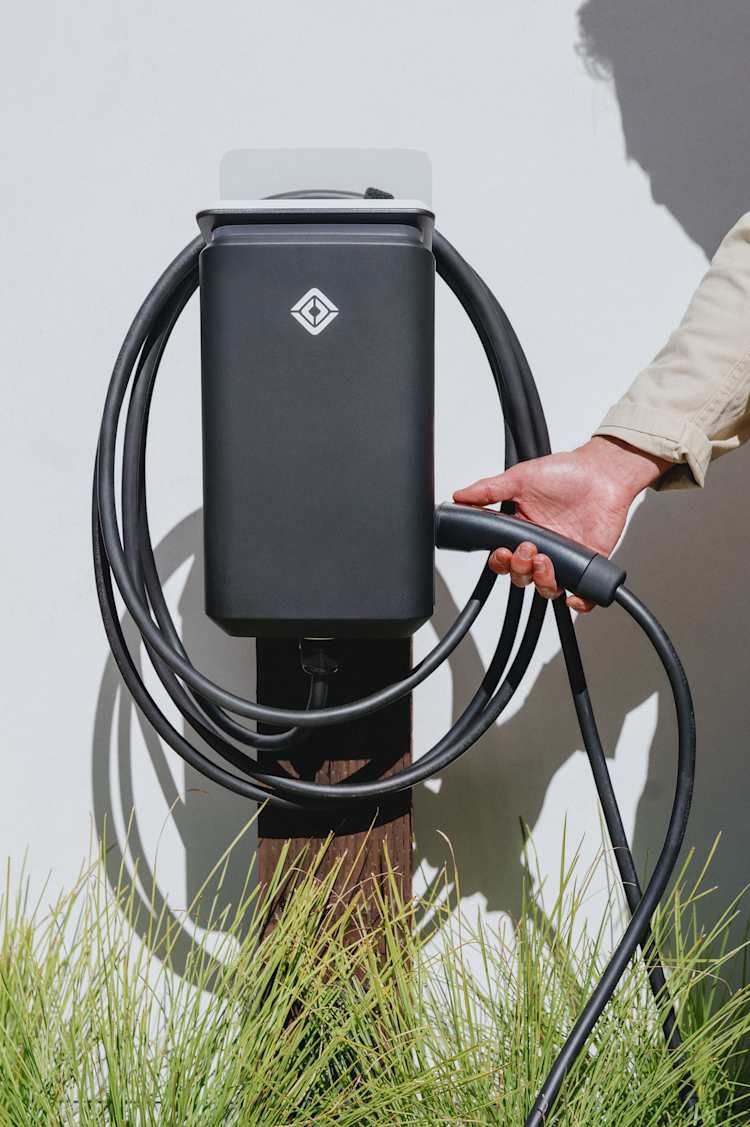
Rivian’s hardwired Wall Charger adds up to 25 miles of range per hour for R1T and R1S, or 38 miles per hour for R2. If you want something you can carry along, the Portable Charger adds up to 16 miles per hour for R1 and 25 miles per hour for R2 on 240-volt power. Note that you might not always get those speeds, as they’re based on ideal charging conditions. Factors such as battery type, power source and ambient temperature can all affect how quickly a vehicle charges.
When you’re unsure of the best times to charge, Smart Charging can check with local utilities and suggest when to charge for less. And with the Energy app, you can check charging progress right from your phone — no need to step outside.
Explore Rivian’s home charging options to find the right charger for your vehicle and make charging at home simple.
Informational purposes only. The information provided in this article is intended for general informational purposes only. It does not constitute professional advice or expert guidance. Where appropriate, consult the relevant operating manual and seek professional assistance before engaging in the activity described. While we strive to ensure accuracy, we do not assume any responsibility or liability for any inaccuracies, omissions or errors in this content.