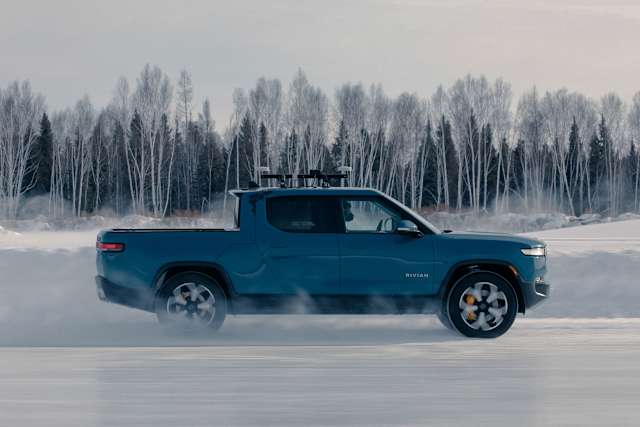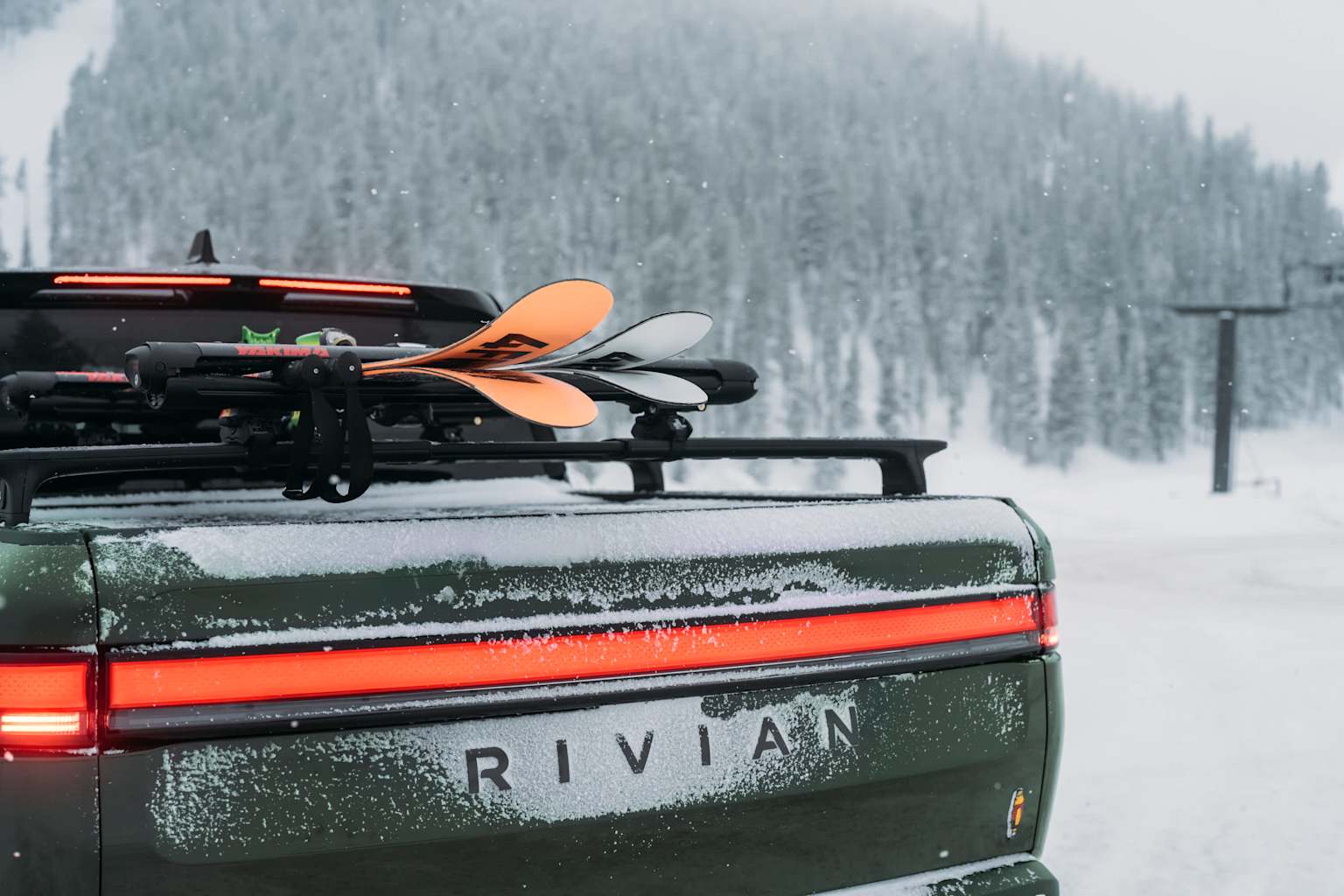
Your vehicle is designed to handle the elements—whether you’re off to the trailhead for a sunrise ski or navigating a slushy commute.¹
But as winter transforms the landscape, it also changes the way energy moves through your Rivian. When the temperature drops, it helps to understand how to get the most out of your vehicle, and how the drive system, thermal management, and energy management systems work together as one ecosystem.


New in 2026.03: cold weather improvements
Our latest update (2026.03) brings more transparency to how winter affects your range. We've introduced a cold weather indicator to the battery icon on the display and Energy App visualizations to show you exactly how much energy is being used to keep your battery warm. You’ll now see a blue shading graphic on the Driver Display and in the mobile app, letting you know if some range is temporarily unavailable until the pack reaches its optimal operating temperature.

Before you head out
A little preparation goes a long way in preserving range and ensuring a warm start to your journey.
Clear snow and ice: Manually clearing snow and ice from your vehicle's windows, roof, hood, windshield and lights helps to accelerate defrosting and preserve energy.
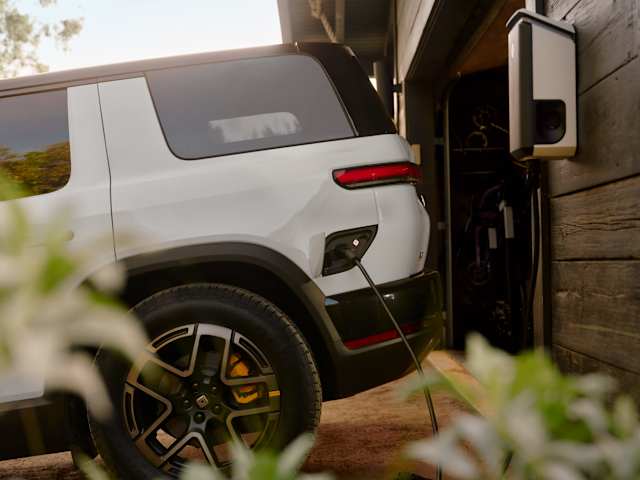
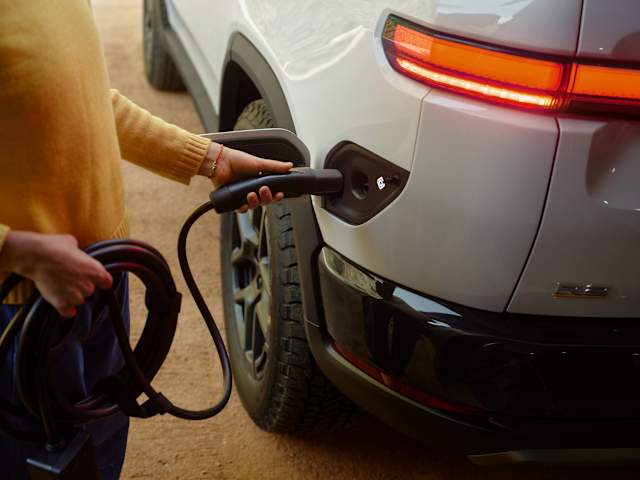
Plug in to recover range: In the latest mobile update, you’ll notice a new recommendation accompanied by the cold battery indicator: a reminder to plug in at home to recover range. When the battery is cold, its available power can decrease. Charging your vehicle allows the vehicle to draw from the grid to warm the cells, "unlocking" that range before you even get behind the wheel.
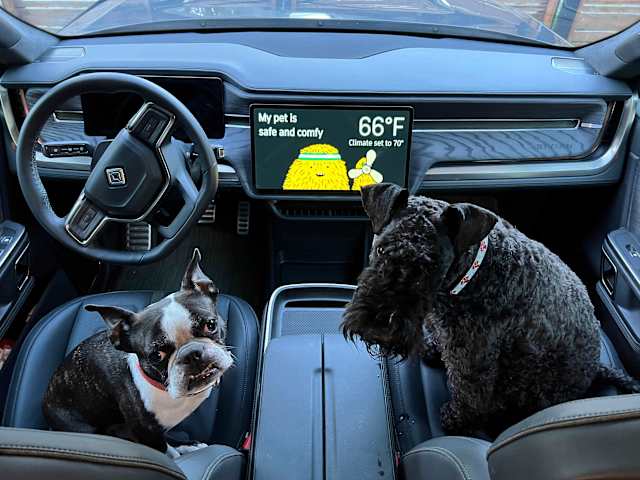
Give yourself a head start: To plan ahead of a commute in snowy or icy weather, use the Rivian Mobile App to activate your climate, window defrost, and heated surfaces about 30 minutes before you leave. You can also do this via the new Apple Watch app.
Improved Battery Conditioning: With 2026.03, we’ve refined how the battery warms up ahead of a drive. While charging, the system is now even more efficient at recovering range and pre-conditioning the pack for peak performance.

On the road
In a cold environment, your vehicle works harder to keep you and the vehicle systems at the optimal temperatures, so you may see higher than typical energy consumption. Your Rivian’s software works behind the scenes to mitigate this, but these steps give you more control:
Use the Energy App: Refer to the new cold weather visualizations in the Energy App during your drive. It will show you how the vehicle is regulating and circulating heat from the drive system to warm the battery pack while you drive.
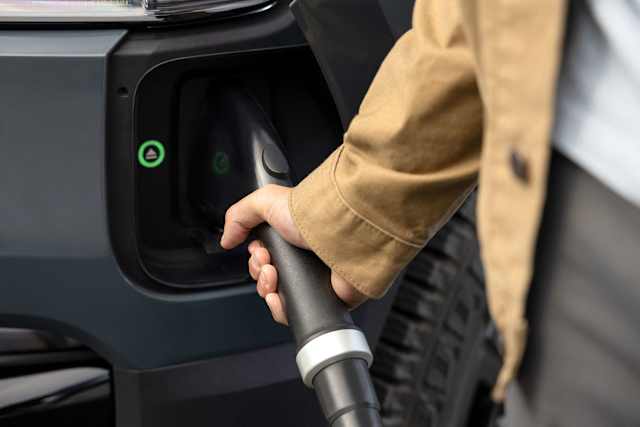
Navigate to a charger: If you’re stopping at a Rivian Adventure Network or third-party station, let your vehicle know via navigation. While you can prepare your battery for fast charging on-demand, using navigation automatically triggers the battery to "precondition," bringing it to the ideal temperature for the fastest possible charging speed when you arrive.
Set desired range on arrival: Rivian’s Trip Planner helps predict impacts on range due to weather and other driving conditions. That’s why setting your desired range and using navigation helps ensure you arrive at your destination with optimal charge.
Engage Snow Mode: This mode softens your acceleration and adjusts regenerative braking to prevent slippage on slick surfaces, giving you a more planted, confident feel.
Use Climate Hold: If you need to stop for a quick errand or refreshment, tap the “Climate Hold” button in the Energy App or Rivian Mobile App to keep the cabin comfortable.

Know your battery chemistry
Different battery chemistries have different state of charge "happy places." Knowing which pack powers your adventure helps you maintain its health for years to come.
NCA (Nickel Cobalt Aluminum): All Gen 1 vehicles, plus Gen 2 Large and Max Packs, have this chemistry. Keep your daily charge between 50% and 70%. Save the 100% "Full" charge for long-haul road trips.
LFP (Lithium Iron Phosphate): Gen 2 Standard Packs have this chemistry. These packs thrive with more regular charging. We recommend charging to 100% periodically to keep the range estimation and regenerative braking performance precise.

Long term winter storage
If your Rivian is staying home while you head elsewhere during the winter, the best practice is to keep it plugged in. This allows the energy management system to maintain a stable temperature. If you can’t stay plugged in, aim for a state of charge between 50% and 70%, as avoiding the extremes (0% or 100%) helps maintain cell health over time.
Winter is one of the best times to experience what your Rivian can do. By managing your energy mindfully and utilizing the new insights in our latest software update, you can spend less time worrying about the cold and more time enjoying the season.

Please use this information for educational purposes only and always refer to your official Rivian Owner's Guide for the most comprehensive advice on optimal cold weather vehicle performance. While we strive to ensure accuracy, we do not assume any responsibility or liability for any inaccuracies, omissions or errors in this content.