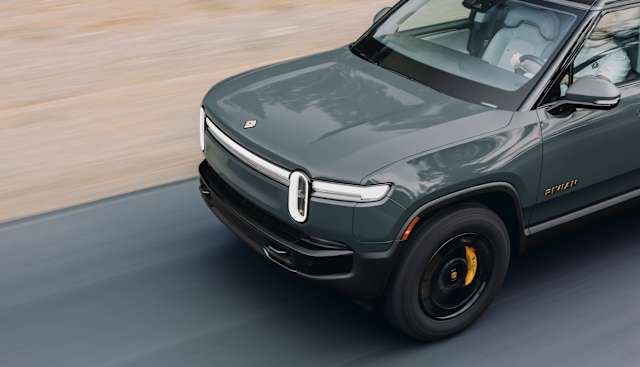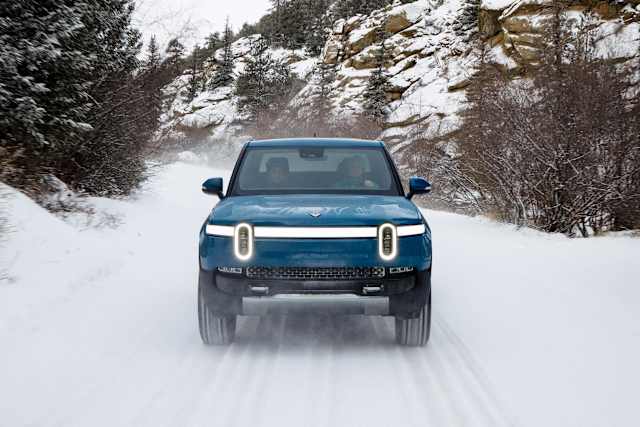
Our latest software update brings a noticeable improvement to low-speed ride comfort in R1 Gen 1 and 2 vehicles when “soft” or “moderate” ride feel are selected, especially when navigating bumpy city streets or tackling uneven off-road trails.
Updates of this kind are enabled by our vertically-integrated hardware and software stack that we have designed, engineered and developed in-house. Read on to learn more about this update.

Vehicle stabilization and how Rivian’s system works
“Body roll” is the tilting or leaning motion of the vehicle’s body and the transfer of weight to the outside wheels that occurs when a vehicle turns a corner. Many vehicles have anti-roll bars—commonly known as “sway bars” or “stabilizer bars”—which connect the right and left wheels to reduce body roll during cornering. However, because of the way they’re designed, anti-roll bars can also lead to a harsher ride. Rivian vehicles don’t have anti-roll bars; instead, we've built a sophisticated hydraulic roll control system in-house.
The system uses hydraulically interconnected circuits at each corner to control body roll. It also has a pump that can increase or decrease hydraulic pressure to allow more or less body roll depending on your drive mode or ride feel selection.
Each damper also has what we call a "comfort valve." When these valves are open, they disconnect the hydraulic circuits that create roll stiffness. This allows the wheels to move more independently, soaking up bumps and uneven surfaces without transferring that motion to the rest of the vehicle. This results in a smoother, more comfortable ride for all.
Getting the comfort valves to work is a complex process. We need them open for comfort, but we also need them to close instantly when you start turning to keep your Rivian stable and responsive. That means our system has to constantly monitor things like your speed, steering wheel movement, how quickly you're turning and lateral grip.

Software and suspension work together
In the latest update, our engineers have developed a smarter way to detect low speed bumps and jolts, using intelligent algorithms that can better analyze the data from sensors around the vehicle. This means we can keep the comfort valves open for a much wider range of low-speed situations, giving you a significantly smoother ride.
With the latest update, Rivian vehicles should traverse more smoothly over low-speed bumps and uneven surfaces. At higher speeds, where roll stiffness is crucial for stability and handling, Rivian vehicles should still handle corners with confidence and remain as capable as ever, ready for any adventure.
This update is part of our commitment to delivering the best possible ride quality, and listening to our customers’ feedback. We hope you enjoy all the refinements of 2025.10!
See below for the full release 2025.10 release notes.