Rivian batteries were designed for both their first-life vehicle application and, importantly, a post-vehicle second life in energy storage. Second-life batteries are key to accelerating widespread adoption of renewable energy. In partnership with Alex Honnold and the Honnold FoundationOpens in new tab, we’ll leverage Rivian batteries to support community-based organization Casa Pueblo in their efforts to create a self-sustaining solar microgrid.
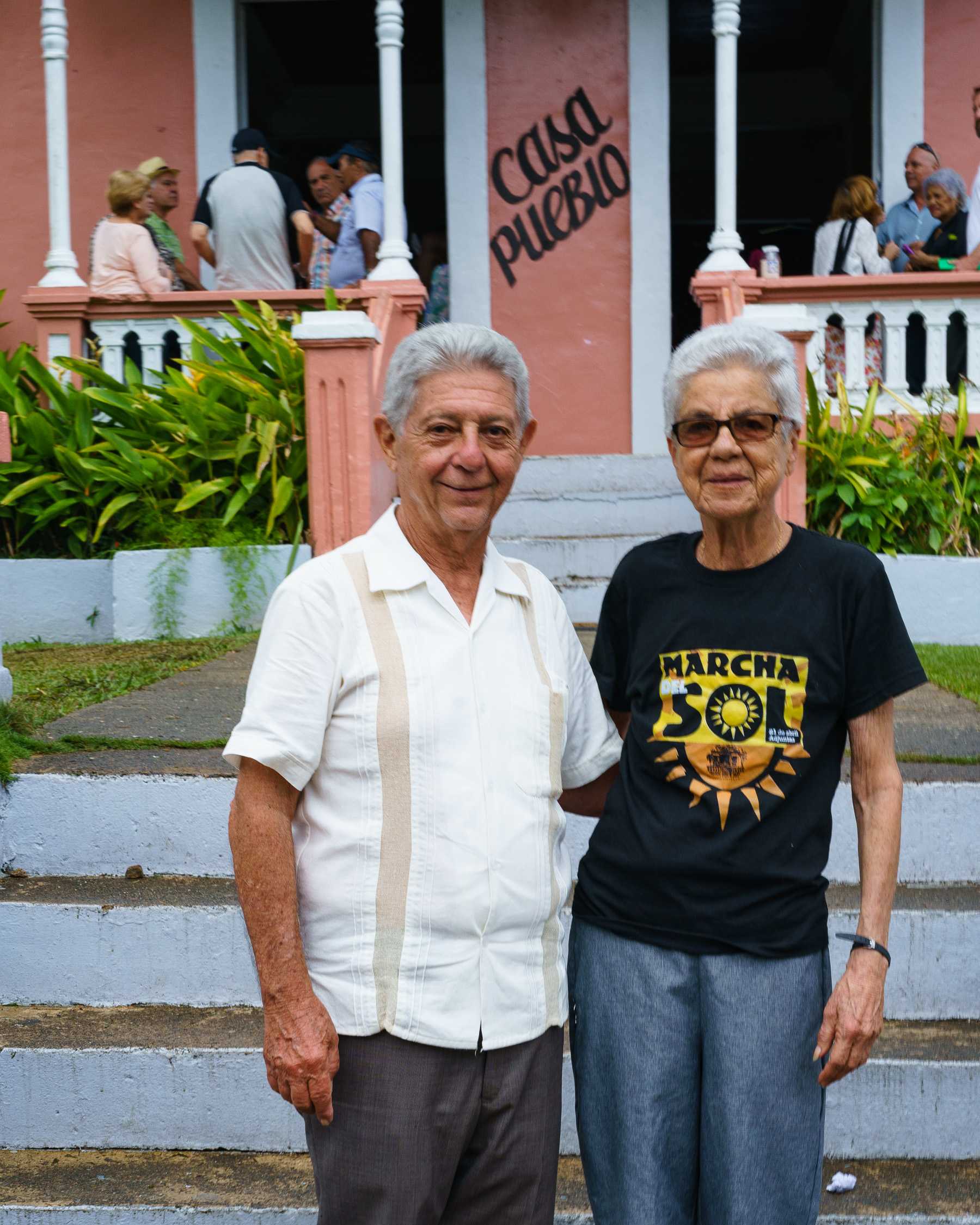
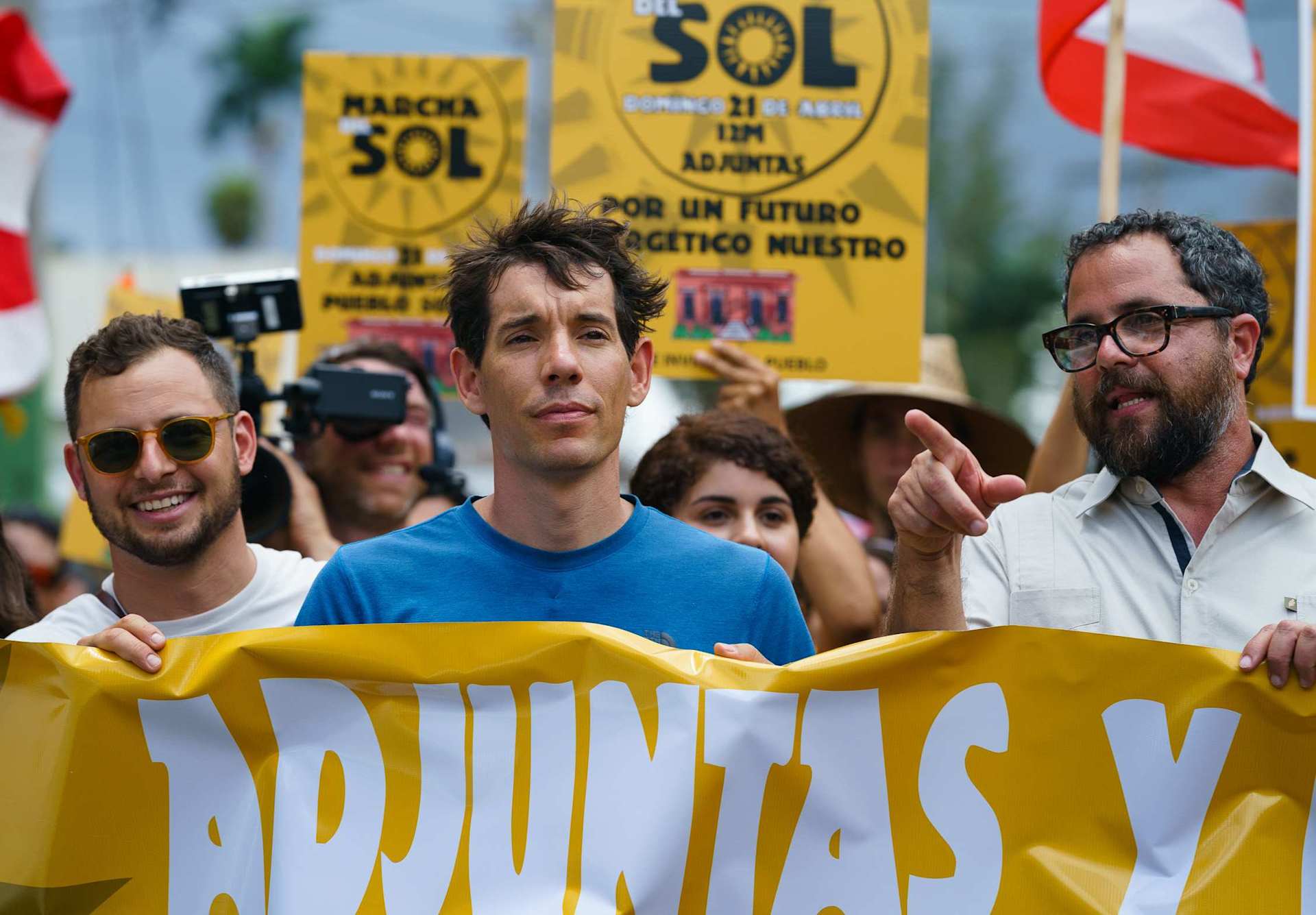
On the day our battery team arrives in the mountainside town of Adjuntas, Puerto Rico, there isn’t a cloud in the sky. The sun is shining, and the 45 solar panels that sit atop Casa Pueblo are converting sunlight into electricity to power the headquarters of the grassroots organization. For the last two decades, this simple solar setup has allowed Casa Pueblo to meet all their day-to-day energy needs. In the wake of Hurricane Maria, they’re working to help the rest of Adjuntas achieve energy independence.
When Alex Honnold and Dory Trimble, executive director of the Honnold Foundation, shared Casa Pueblo’s ambitions to energize the entire town of Adjuntas with solar power, we committed to helping them. Recently, Rivian battery engineers joined the Honnold Foundation at Casa Pueblo to understand how we could help power the local businesses of downtown Adjuntas sustainably.
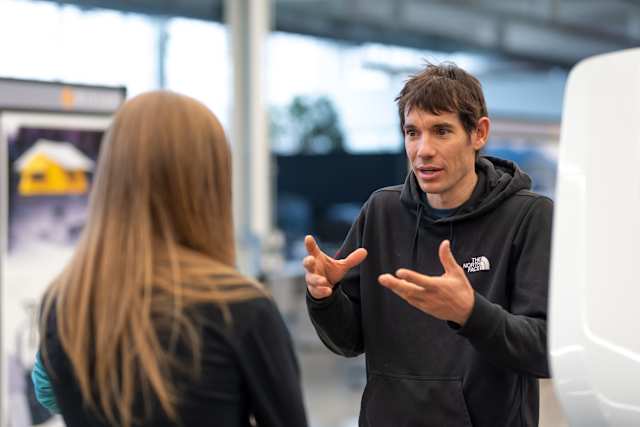
“This project is the biggest, most complex project that we've taken on through the Honnold Foundation, but what makes it so inspiring to us is that Casa Pueblo has already laid down so much of the groundwork. It's all right there, and yet, it still represents a big step forward,” said Alex. “Those are actually the same types of projects that I love in climbing — when it's bigger and harder than anything I've done before, and a little bit outside my comfort zone, but seems pretty doable when you break it down.”
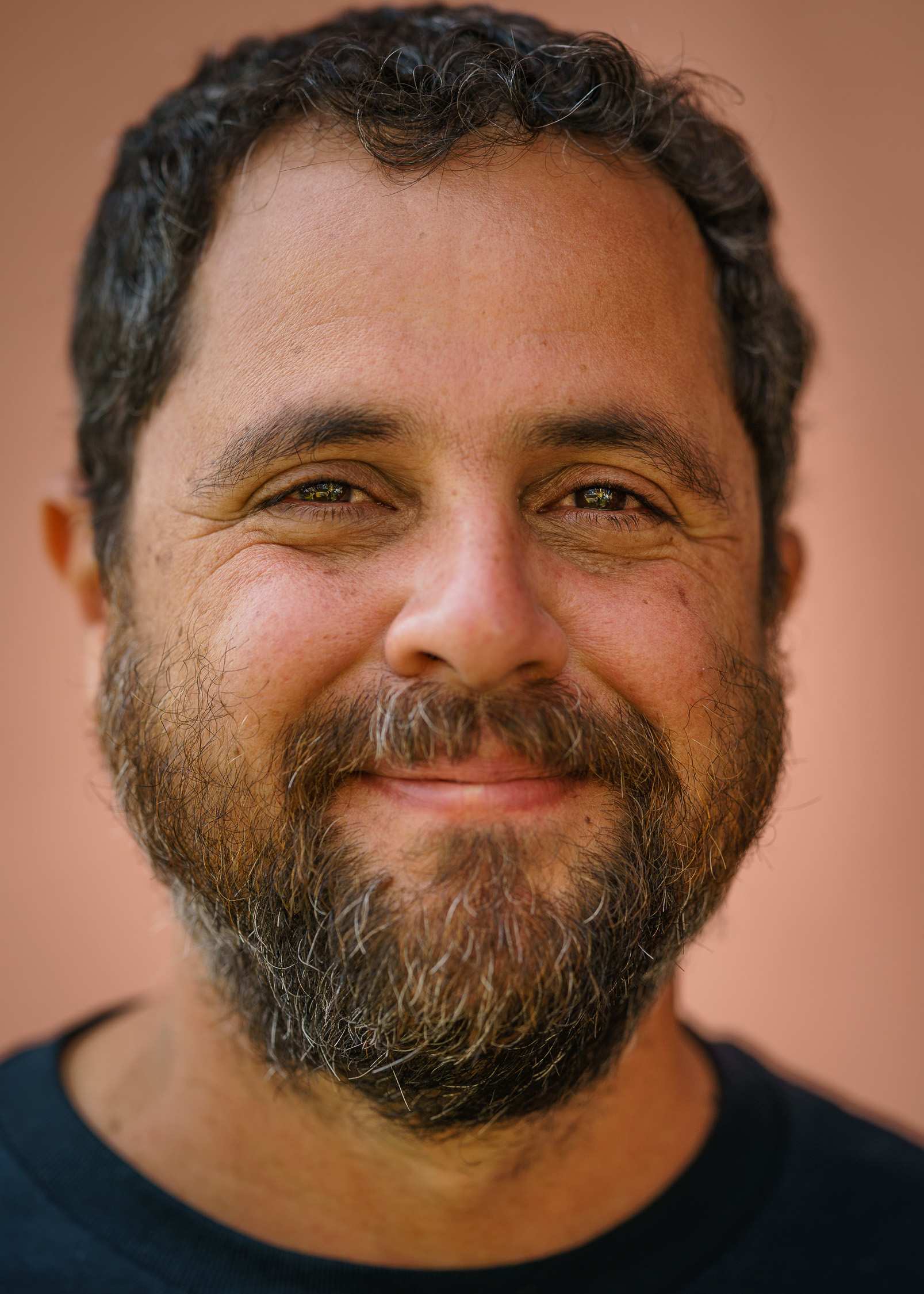
Fortunately, the people of Casa Pueblo have the other kind of energy required to power this type of movement — the unwavering kind that generates both optimism and activism.
“Hurricane Maria demonstrated the necessity to move away from a centralized fossil-fuel system and the urgency to embrace clean energy sources,” said Dr. Arturo Massol-Deyá, Associate Director of Casa Pueblo. “The time to make this transition is now. Adjuntas is ready.”
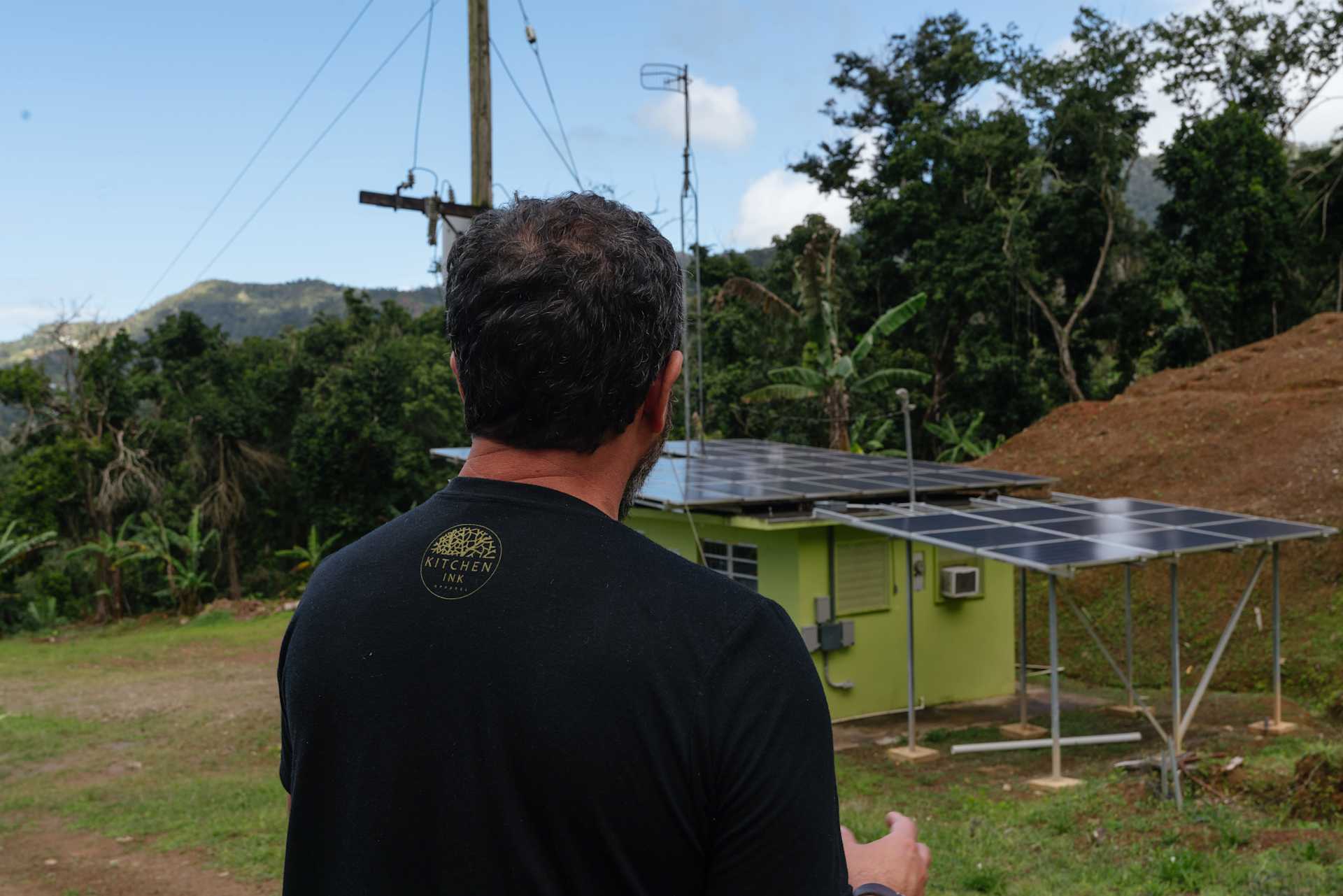
“It’s rare to find a place where everybody in the town already knows that solar is a good idea. You don't need to sell it to anybody here. Thanks to Casa Pueblo’s organizing and outreach, both residents and business owners know how it works, and they know how powerful it can be when it comes to disaster resilience, climate resilience and stimulating the local economy,” said Dory.

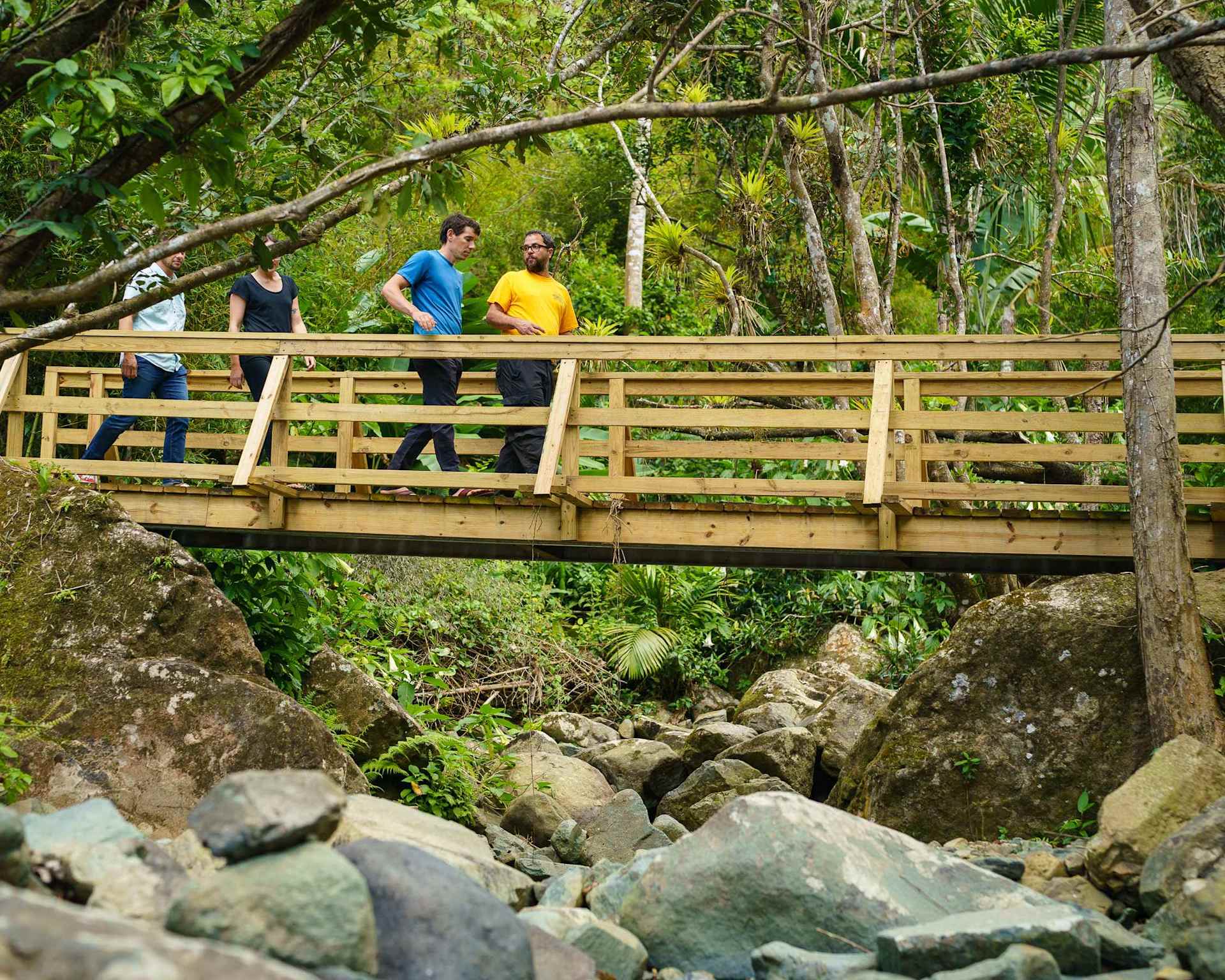
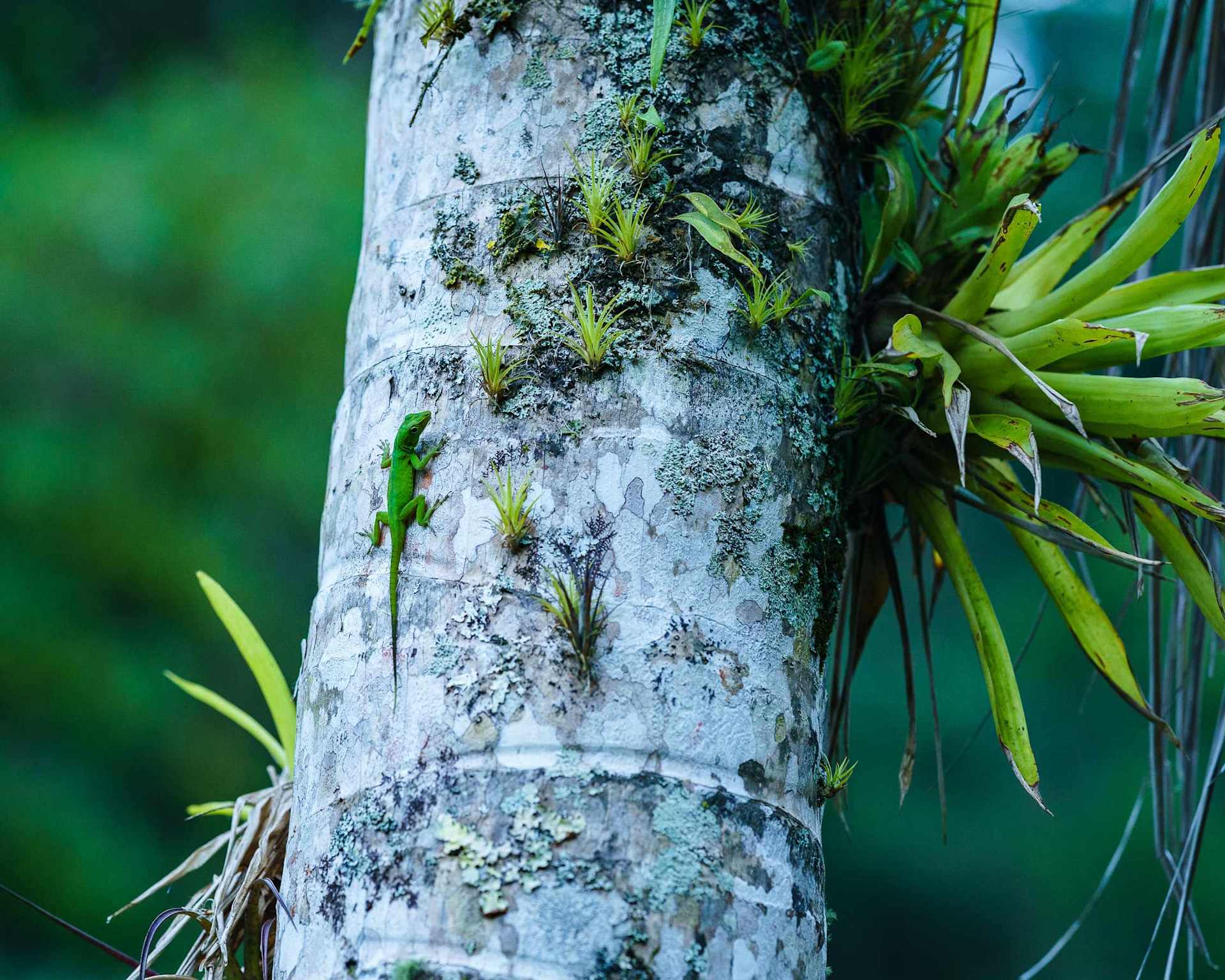
While Puerto Rico is geographically fortunate to be able to generate solar energy year-round, storing energy during the day to use at night presents a challenge. This is where Rivian batteries come in. After the vehicle batteries are removed from the vehicle, they still have substantial capacity and are being used to help establish a sustainable microgrid in Adjuntas.
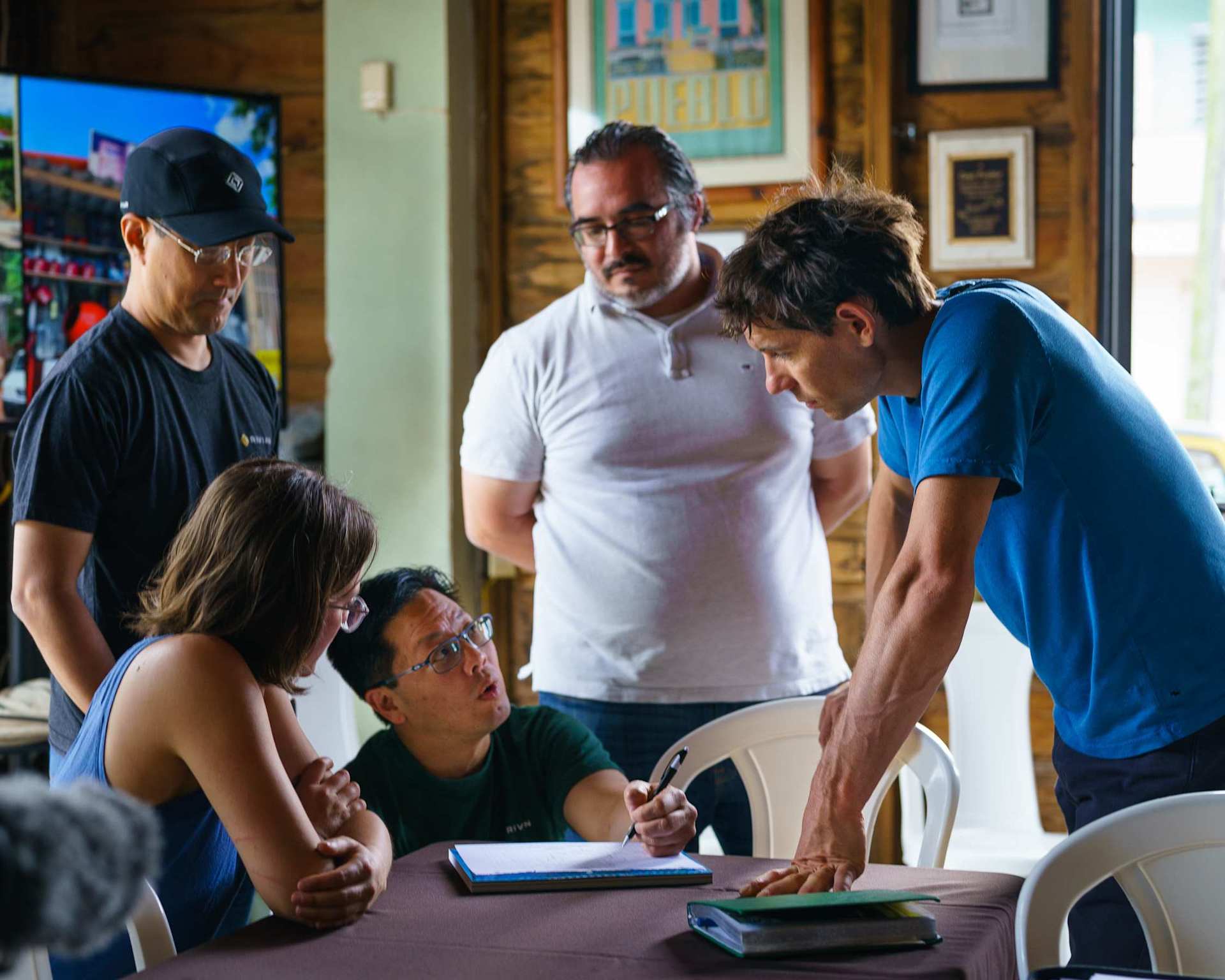
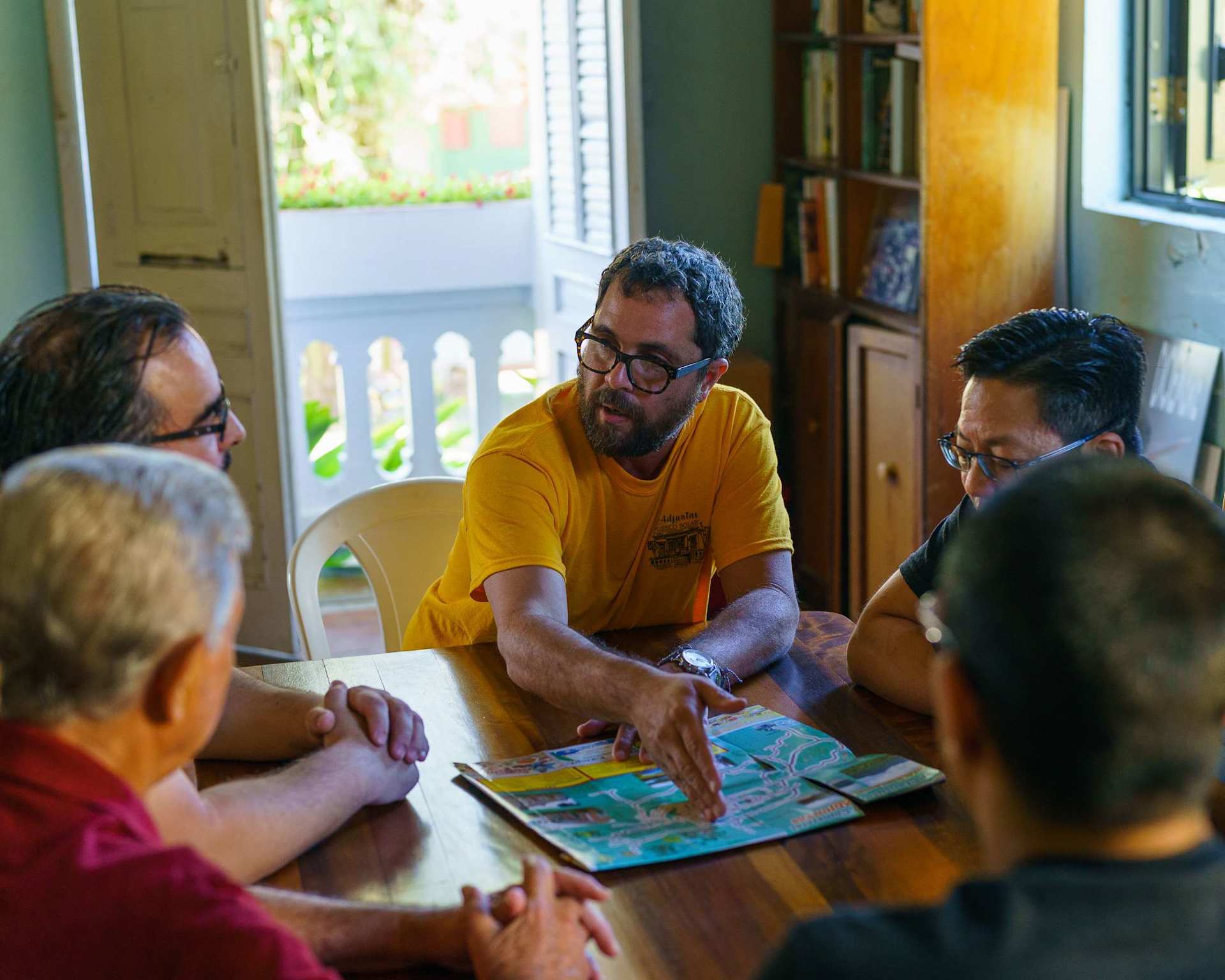
“We’ve spent years developing a long-range battery for rugged environments, but we’ve also made sure to design the battery to work in a variety of second-life storage applications,” said Jorge, Rivian battery engineer. “Today was about sitting down together with Casa Pueblo to design a safe, reliable storage solution for the community that will serve as a model of sustainability for other municipalities throughout the island.”
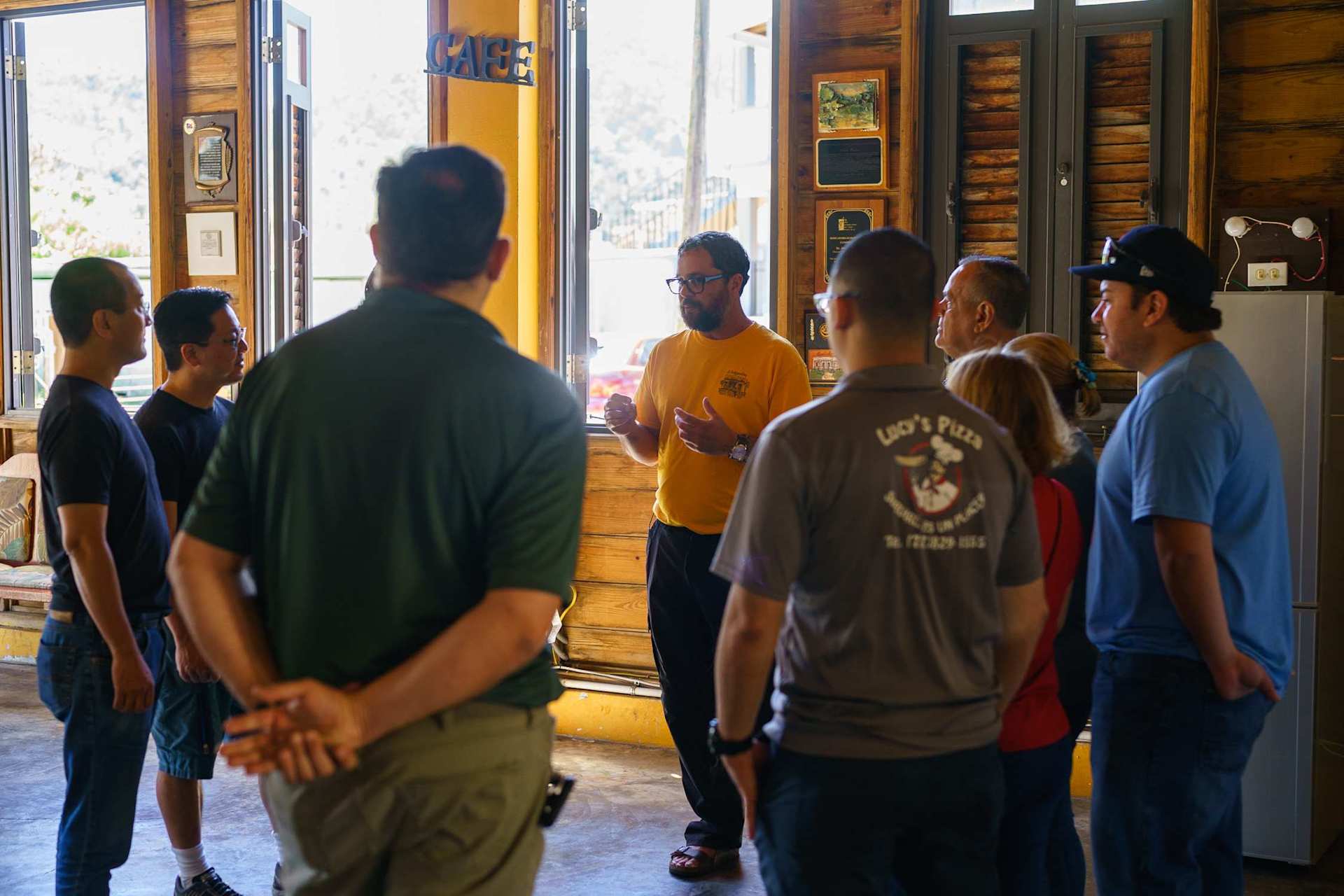
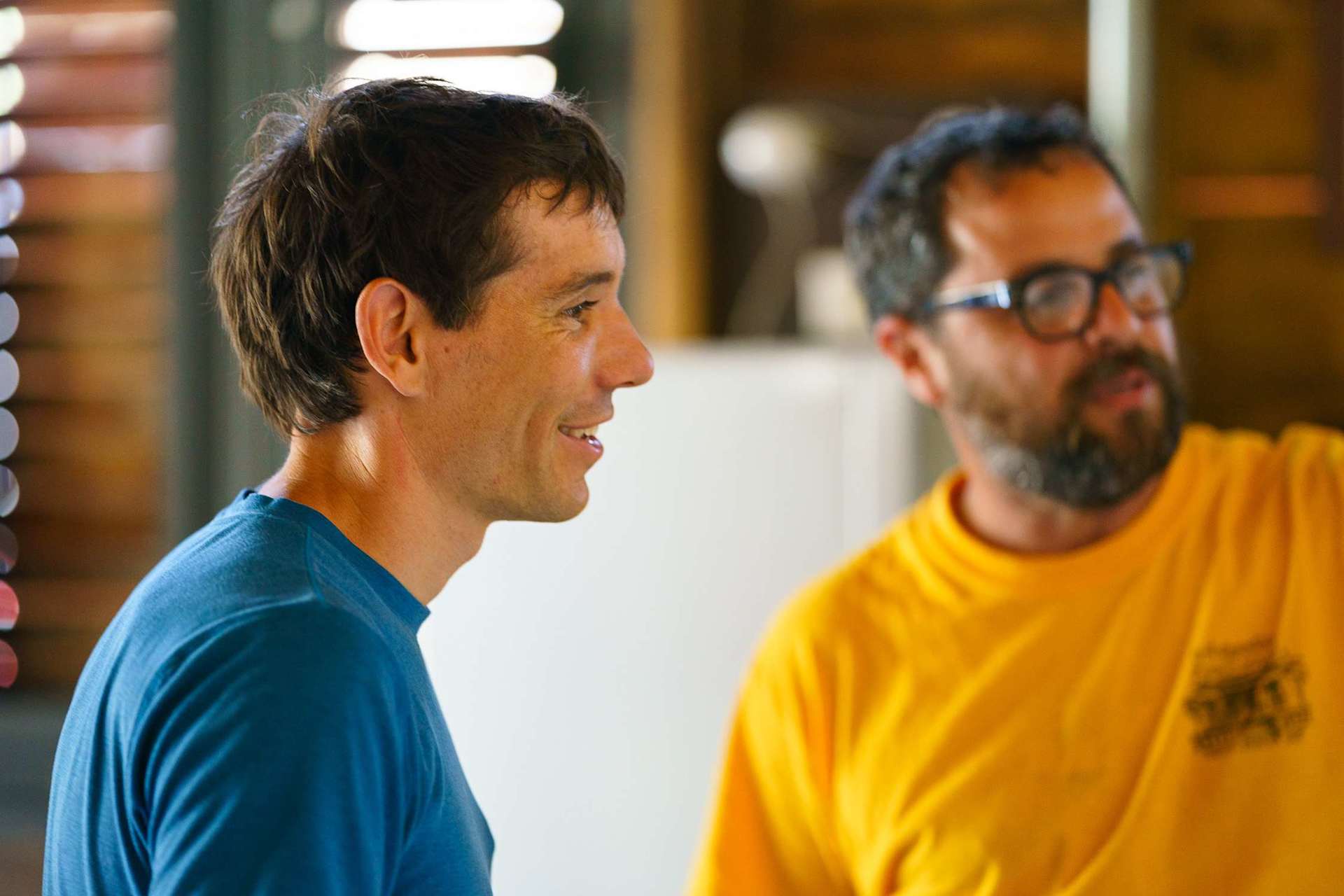

Championing solar initiatives and social equality can be an uphill climb. This is one Alex doesn't have to do alone.
“To show the world that second-life batteries can actually help power a whole community, in a way that is also extremely resilient to storms and whatever may come their way — it's a win-win,” said Alex.
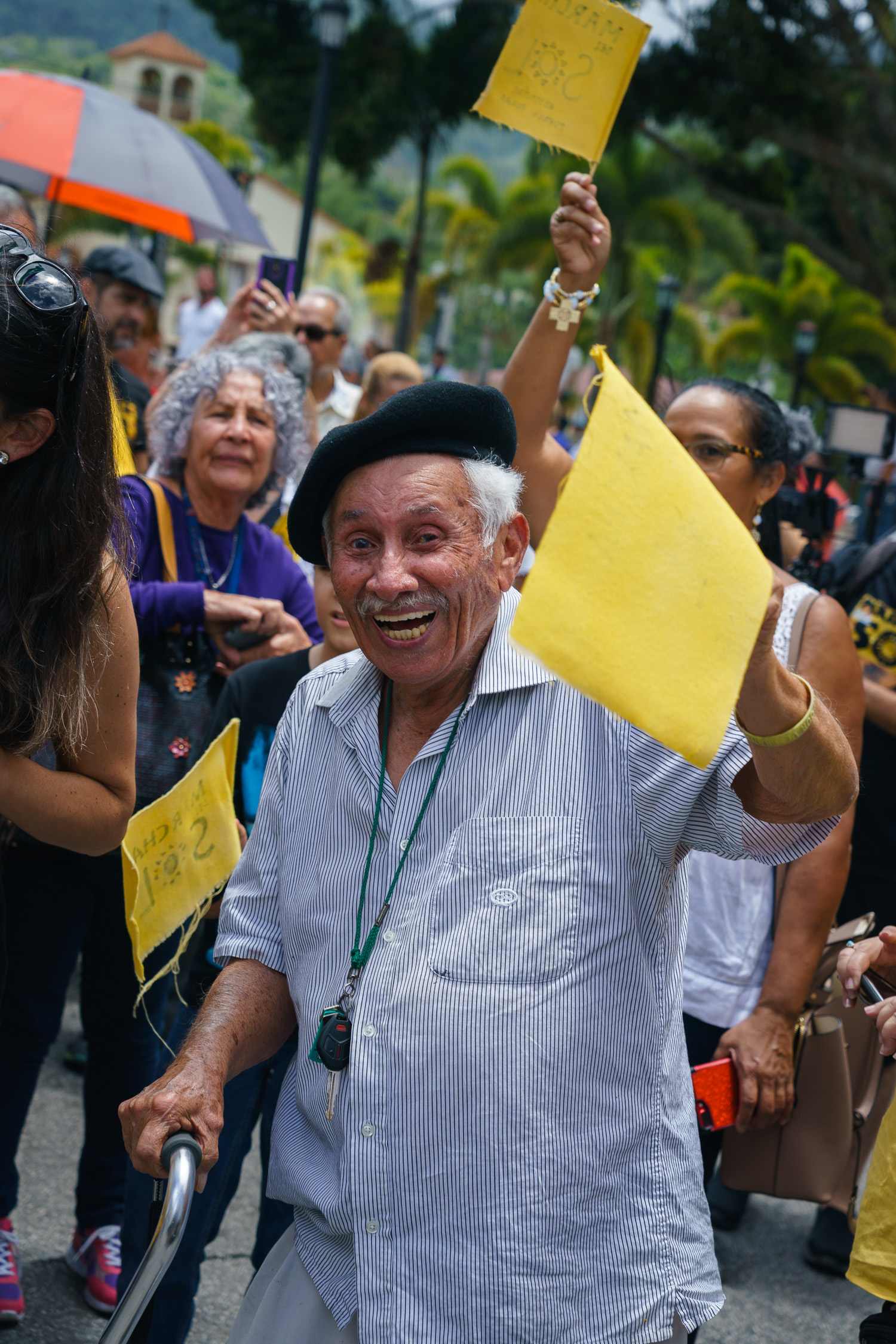
As our work with the Honnold Foundation and Casa Pueblo develops, we’ll continue to share our progress and the stories that transpire along the way.
To make a donation to the Honnold Foundation, click hereOpens in new tab.

FILM CREDITS
a Moonhouse production
Ben Moon, Director
Shannon Ethridge, Producer
Skip Armstrong, Director of Photography + Colorist
Keenan Newman, Director of Photography
Sashwa Burrous, Assistant Camera
Tim Hardy, Sound + DIT
Dana Shaw, Editor
Original music by Todd Hannigan
Recorded and mixed at Brotheryn Studios
“Strong Hearts”
Todd Hannigan
“Casa Pueblo Theme”
Todd Hannigan
Featuring Xocoyotzin Moraza, Laura Mihalka, Jesse Siebenberg, Austin Bede
“Honnold Foundation Theme”
Todd Hannigan
Featuring Xocoyotzin Moraza and Austin Bede
Some images shown may contain pre-production vehicles and vehicle specifications mentioned in this blog post may have changed. Please refer to our website or reach out to Customer Service for current vehicle information.