“⭐️⭐️⭐️⭐️⭐️.”
“10/10.”
“Would charge again.”
Rivian’s April software update introduced a new rating system for fast chargers, empowering owners with important information and expectations long before they pull up and plug in.
Using data to rate chargers is just the latest addition to a constellation of features aimed at making the entire trip planning and charging process as effortless and worry-free as possible, said Wassym Bensaid, Chief Software Officer at Rivian.
We sat down with Wassym to talk about how Rivian’s software and data are working to create a better and more seamless EV ownership experience – and in doing so, to help lessen range anxiety and trip planning pain points.

Question + Answer
We’ve seen lots of new features related to trip planning and charging over the last few months. Can you tell us about the latest one, and about the goal of these new features?
Wassym: A big focus for us is to make charging and trip planning more seamless and to inspire peace of mind for customers – where you just don't have to think or worry about any of it. We want to remove any friction, any anxiety, from the entire experience.
With each monthly software update for a while now we have been introducing incremental elements to be able to do this. The latest feature, charging score, points drivers to the most reliable chargers on their route. This means when you're planning and taking a trip, you no longer need to worry about whether you're headed to a charger that’s broken or would not offer you the best performance. And the beauty is, it's fact-based – a score for each charger created from a collection of data from our connected fleet architecture. The more our owners take trips with us, the richer the data will be, which means we’ll be able to offer continuously more accurate charger reliability guidance thanks to our community.
"You no longer need to worry about whether you're headed to a charger that’s broken or would not offer you the best performance."

What’s the big picture – what do all of these individual updates add up to?
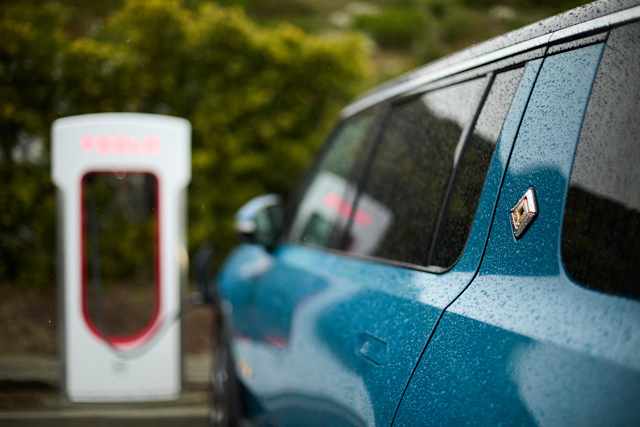
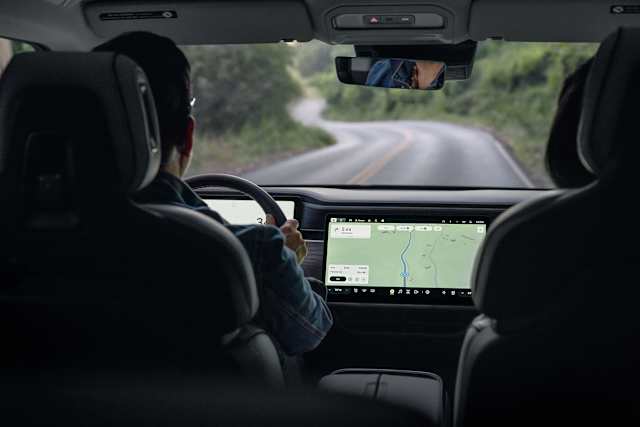
Wassym: You can now plan a trip on your phone from the comfort of your couch. You can plan your charging stops and have full confidence we will route you to the most reliable chargers along the way. You can decide to add a stop to your trip or change the order of your stops. You can send that trip to your vehicle, and as you get into your vehicle, your trip will magically present itself on your center console. And once you’re on the road, you have access to the Tesla Supercharger network and the more than 15,000 fast chargers, which are now an integrated part of our digital experience, both mobile app and in-vehicle.
Our goal is to have the best and most seamless end-to-end trip planning and charger integration we can based on the capabilities we have with each charging network. We want to be able to show you, in your app and on your vehicle screen, charger pricing data, the number of available chargers, the type of chargers, and when you pull up, for you to be able to just plug in and start charging. Essentially for you to have the same level of experience you have charging with our own Rivian Adventure Network.

Access to many more fast chargers is huge, but pointing people to the most reliable chargers out there? That seems like an entirely new thing for EVs. Is it a first, and where did the idea come from?
Wassym: This is the first time EV drivers have had access to a data-driven tool to rate chargers, yes! I had a big “aha” moment last summer. I was driving through Palm Springs, California, and my navigation recommended a charger, but then I was like, “No, I’d like to try this other one that seems to be close to a grocery store.” When I plugged in at the other charger, it was not operating anywhere near peak performance, and it was about 120 degrees outside that day, and the whole time I was thinking, “We need to do this better. If we route you to a charger, we need to make sure you don't waste your time on one with bad performance.”
So, when I got back, we had a brainstorm with our teams, and started to figure out how we might leverage all the charger data we’ve been collecting with our vehicles. There’s obviously lots of complexity to that data, because when there's a failure with a charger, it could be due to charger maintenance but could also be due to a credit card problem or an issue with the vehicle. But given the rich, detailed diagnostic data we have, we are able to really detect outlier and build a very robust and objective reliability score and rating for chargers.
"This is really the demonstration of everything we have been trying to build since day one."
Rating chargers on their performance and reliability feels like a democratization of the charging experience – similar to when restaurants started posting food safety inspection ratings right there in the window. Do you think giving EV owners access to this kind of data to use in their decision making will also help encourage charging networks to improve?
Wassym: Absolutely. We see all these messages and reviews online and across multiple charging apps from users who are either complaining, or sometimes actually happy with their charging experience. In some cases, we can also see supposed uptime data from charging networks. But we feel that by adding a charger reliability score, we’re giving power back to the community, because it’s based on data – an objective assessment and rating of the robustness of each charger. And the more information we get from our community, the more we can make continuous improvements that benefit everyone, and the more peace of mind we all gain while planning road trips or pulling up to a charger.

Software is like a swan. Ideally what people experience is what you see above the water -- a smooth, elegant glide. But there’s also a lot of work and coordination going on below the surface. What’s happening below the surface here?
Wassym: Behind the scenes there's lots of technology that goes into this, multiple elements and systems all connecting with each other. There's the mobile app, there's the in-vehicle infotainment navigation and infotainment systems, and the vehicle energy-management system. And then there's the cloud integration with the charging networks.
Then there's really a very powerful element we're leveraging to build this feature, which is our connected data platform, which allows us to take aggregated information from our vehicles to make the ownership experience better over time. For the first time, we're able to introduce this charging score to guide our owners to the best possible charging experience. The most precious resource for our customers is time, and the more we can be predictable in terms of their charging, the more they can properly plan and the better it is for their entire experience.
"We're enabling what we believe will bring peace of mind."
It was a big decision for Rivian to design its own software and hardware from scratch, in-house, in the hopes of creating deeply integrated products and experiences. One of the benefits of that integration that you talk about often is the sheer amount of data that gives you access to that you can use to continually refine and expand those products and experiences.
Wassym: Yes! It seemed so conceptual at the time, so theoretical, but our trip planning and charging experience is the perfect example of that decision to design from a clean sheet coming to life. Ours is not just a computer on wheels, it’s data on wheels, and an AI system on wheels, and a truly connected architecture in which the vehicle constantly uploads data to the cloud but is also able to receive data from the cloud. The more vehicles we have on the road, the more data we get, and the better our data-enabled experiences become. I mean, really this is the entire vision starting to come together. This is why I really think this is a big moment, not just for our owners, but from an architecture and technical standpoint. This is really the demonstration of everything we have been trying to build since day one.

With mountains of data flowing in all directions from all the internet-enabled objects we’ve welcomed in our lives, data privacy continues to be a hot topic – particularly for the automotive industry, as manufacturers start doing more with software-enabled vehicles. How do you balance the need for data to be able to continuously improve our vehicles with our owners’ need for privacy?
Wassym: I think this is a super critical point. I mean, this topic is really, really important to the way we see and use data both now and in the future. There are a number of guardrails around and philosophies behind how we leverage data, but above all, it’s important to say we do not sell individual customer data to third party providers. This will never happen.
We want to establish trust with our customers, because we believe in an open and transparent relationship in which we are using the right kinds of data for the right purposes – primarily to drive continuous transformation and improvements for our vehicles for our owners to enjoy.
We are really focused primarily on vehicle data, which is aggregated and anonymized, and used for things like assessing reliability of our hardware and software systems, fixing bugs, and delivering constant performance, efficiency and stability improvements to our customers.
We’re not interested in tracking sensitive or private information from our customers. If we did have a need for such data, it would be with an explicit opt-in for our customers in which we explained what we’re using the data for and how that will benefit them.

Your vision for EV ownership is rooted in ease and peace of mind. What would you say to people who might be anxious about charging or hesitant to switch to an Electric Vehicle?
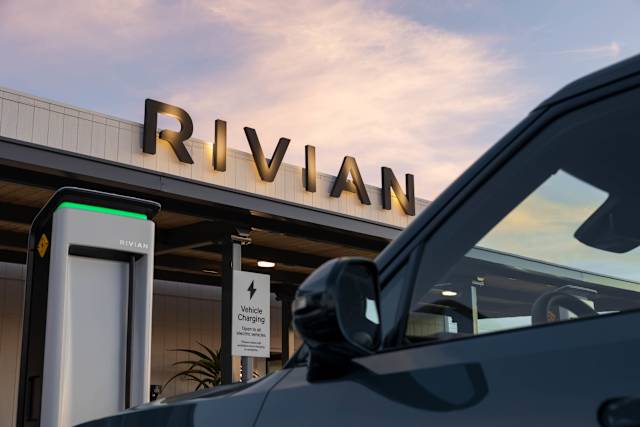
Wassym: First of all, one of the most underappreciated aspects of owning an EV is charging at home. Our data shows the vast majority of trips people take will be in an urban environment and near home, so for those who are able to access charging at home, a majority of the time it will be all the charging you need. Now, if you’re a significant commuter or taking a road trip, you obviously need to be able to stop and charge, and for that it’s a collection of different ingredients that will make this term – and the concern – a thing of the past. One is access to a better charging network. We are big believers in an open EV charging system, and our own Rivian Adventure Network continues to expand and is set to open to all EVs in late summer. We also very recently opened access to the Tesla Supercharger network for our owners, and this is on top of the third-party charging networks they already have access to in the growing EV charging infrastructure.
We want to offer one level up in terms of experience which is not just to route you, or to give you options in terms of chargers, but then to provide that next level of a recommendation. To hold ourselves accountable as Rivian, and also to hold other charging networks accountable, to truly assess that objective charger performance so we can make our customers’ charging stops as effective as possible. It’s things like this, and through the growing efforts around and access to a much better charging infrastructure, that we're enabling what we believe will bring peace of mind. Soon, there shouldn't be any more charging anxiety, at least not to the extent of the past.
"Part of having a very capable vehicle is that it really inspires you to have new experiences."
You are in frequent contact with a host of Rivian customers and seem to have an extraordinary amount of curiosity about their ownership experience, not to mention a reputation for being willing to listen and challenge your assumptions about those experiences. What drives that openness in you, and what have you learned from it?
Wassym: It's a very satisfying and rewarding experience spending time with our customers. I am a big believer that we should continuously challenge ourselves to improve – as humans, as teams, as a company, and to improve our products. It's an overall culture we are building with our teams where priority number one is to make our customers happy, because happy customers are at the center of a virtuous circle. Happy customers will recommend the brand to other customers and help us grow. More Rivians on the road will help increase awareness and positive momentum. And the magic that we have here, through software, is that we built a technology we can continue to evolve over time. We have the possibility to continue to get better and better over time, and we need customer feedback to do that. I mean, there are times when we had certain assumptions about our customer's preferences, where we moved a button or a menu, and heard a lot about it. I think the beauty is we have a point of view on how things should be done, but we're open to feedback. We want to be in that mindset where we're building this experience together with our customers.

Tell us about your Rivian ownership experience. Do you take a lot of road trips? How will you be using these new trip planning and charging features?
Wassym: I love taking road trips. We did one to Yosemite recently, which was really good. We did a longer one to San Diego with multiple stops. Some of my favorite moments in life are heading out with my wife, with the kids in the back, and going on long trips. I also love really trying to plan for the best stops along the way. In some cases, the thing I most enjoy on those road trips is really the stops. Like, which stops have great donuts nearby, and which places will we go that I never would have thought we’d go to if we did not have Rivian. Part of having a very capable vehicle is that it really inspires you to have new experiences and to take your family and your loved ones with you when you do. I mean, that’s something I really, really enjoy.
"The magic that we have here, through software, is that we built a technology we can continue to evolve over time."
Recently, in the same week, Rivian produced its 100,000th vehicle at the plant in Normal and the first Rivian customer hit 100,000 miles on their odometer. How are you feeling about the momentum right now? What are you most excited about?
Wassym: I saw that! Congratulations to Marcus in Arizona. Honestly, what I'm really the most excited about is seeing more and more Rivians on the road. Last week I was driving and literally, in the span of 30 minutes, I must have seen 20 Rivians. I still wave to every other Rivian driver I see.
We’re extremely motivated to continue to improve the experience for existing and new owners alike, but when I wave to another owner, and see a happy face, and we have that exchange, and I think about how much the community is growing? That is really satisfying.