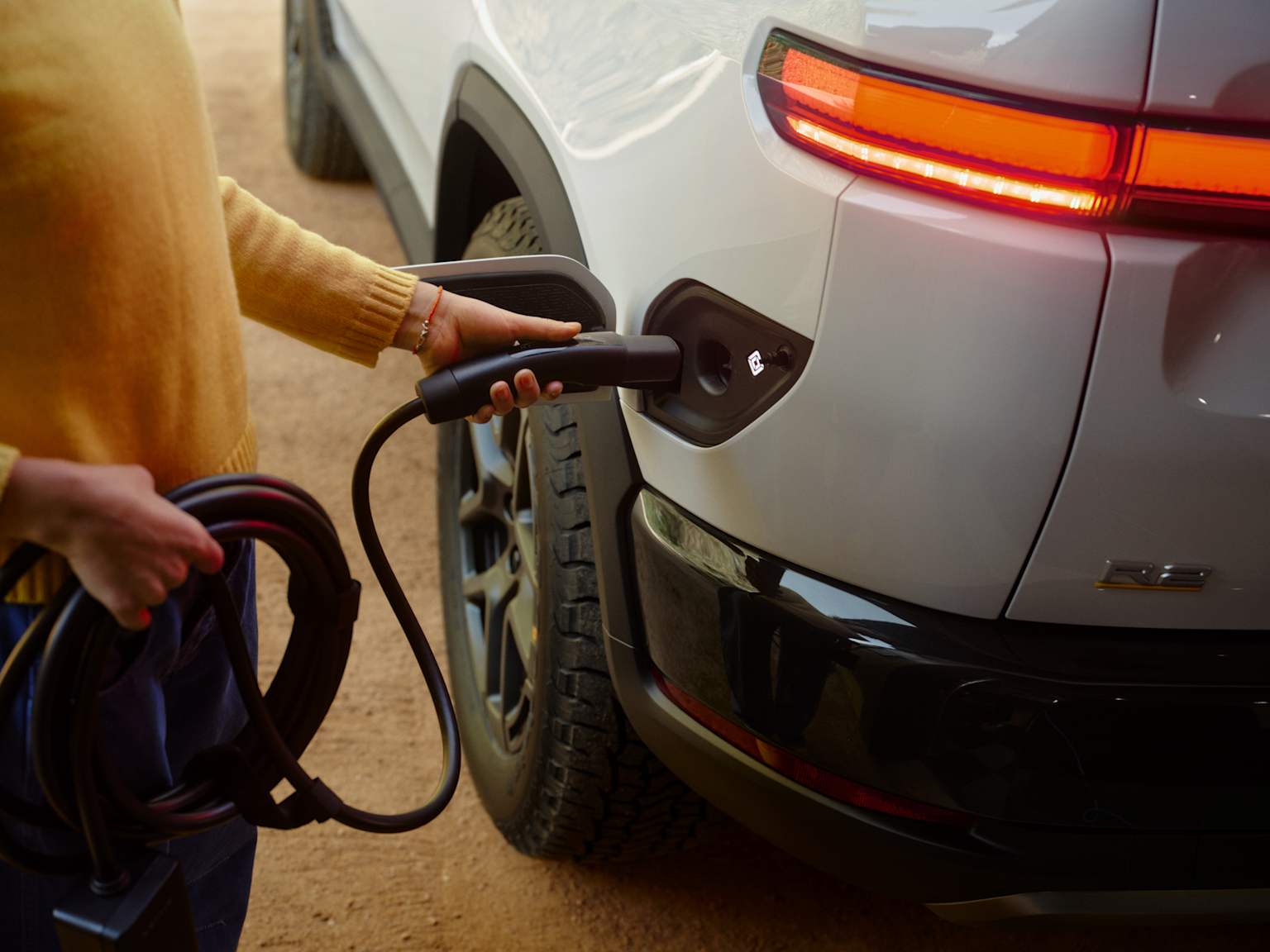
There are so many ways to charge your R2. No matter what your situation is, we want it to be the easiest part.
One of the great benefits of going electric is the ability to charge at home. Once you never have to visit a gas station again, there's no looking back. You simply plug in when you get home and by morning you're ready to go. Most EV owners will home charge 80 or 90 percent of the time, leaving more time for everything else.¹
There are a few different scenarios to consider. Let's walk through the options.
If you have a garage or driveway...
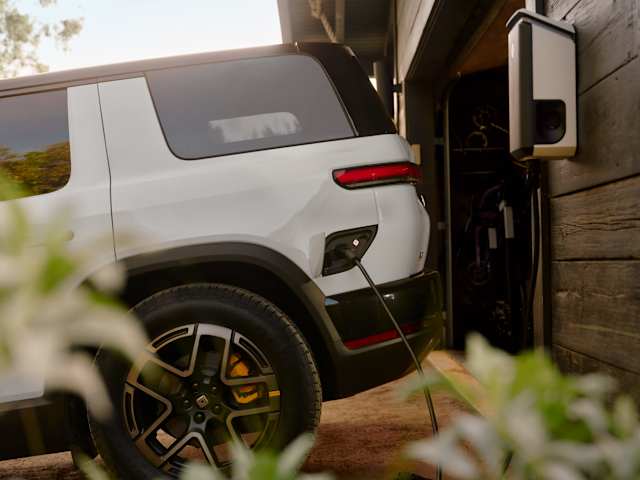
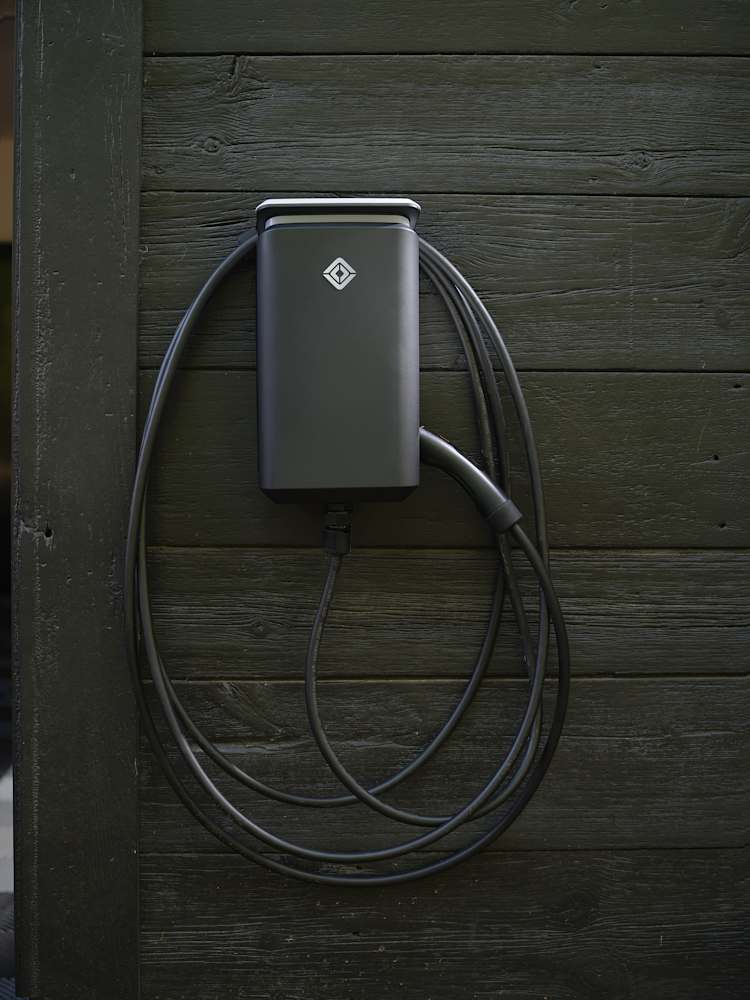
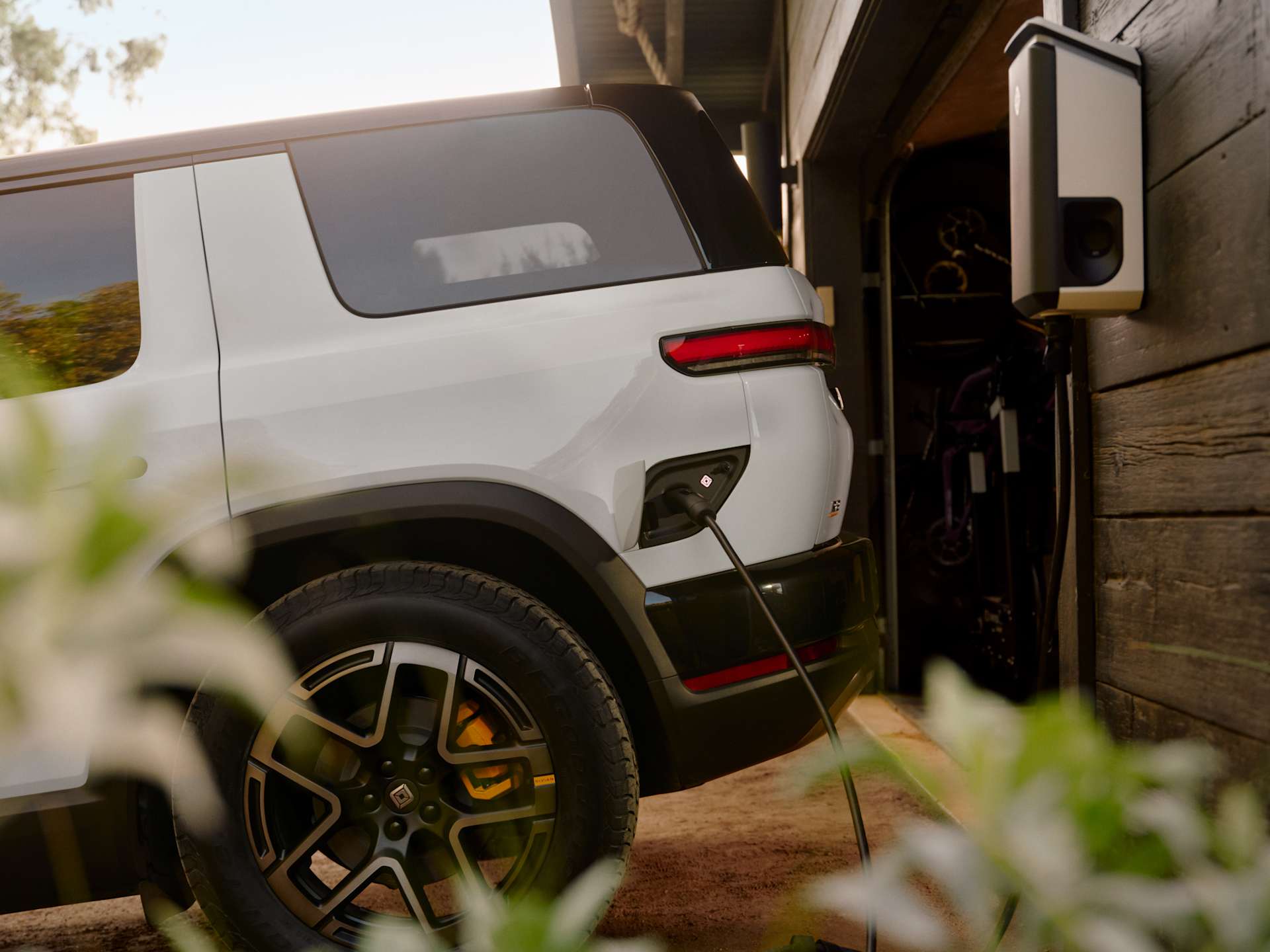
You have three main ways to charge. The fastest is a hardwired wall charger on a 60-amp circuit, like our Rivian Wall Charger. It charges at 11kW, adding up to 38 miles of range per hour for R2.² This is the setup most owners choose if they want a full charge overnight, every time.
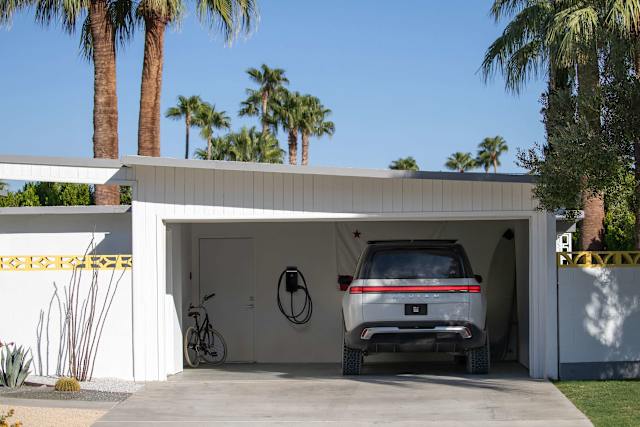
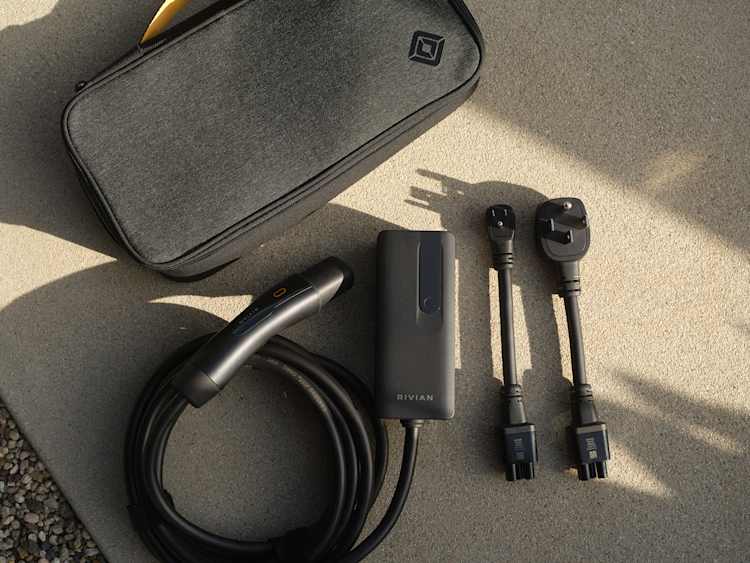
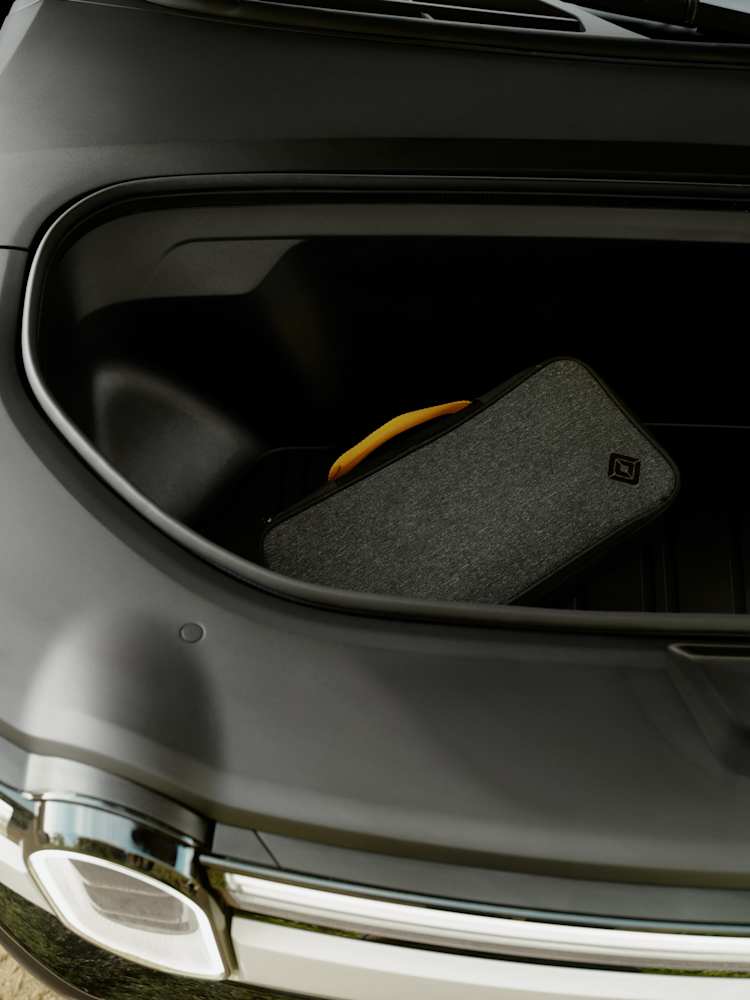
A second option is a NEMA 14-50 outlet, similar to what's used for an electric dryer or range, paired with our Portable Charger. It charges at around 7.6kW and adds about 25 miles of range per hour. Many homes already have these installed, so you can still get the job done for most daily driving without buying new wall hardware.
If you only need a small top-off, a standard 120V household outlet works, too. It adds just a few miles of range per hour, but it's enough to cover short commutes or top up between longer trips. Many owners keep this as a backup even after installing a faster charger.
Whichever setup you choose, hire a licensed electrician. We work with partners TreehouseOpens in new tab and QmeritOpens in new tab who can connect you with one in your area. It's also worth checking for local and state incentives before you install, since many utilities offer rebates for home EV charging equipment.
If you rent or live in a condo...
Home charging is still possible, even without a dedicated garage. A 120V outlet in a shared carport or parking spot may be all you need if your daily driving is modest. Some apartment buildings and condo associations are adding EV charging to common areas, so it's worth asking your building manager or landlord what's available before you buy.
If nothing exists yet, you may be able to work with the property to get something installed. Check for local and state incentives. Many utilities also offer rebates on home charging equipment.
If a home charger isn't an option...
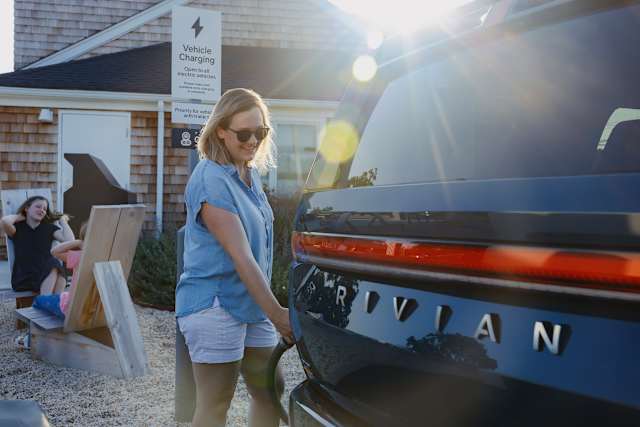
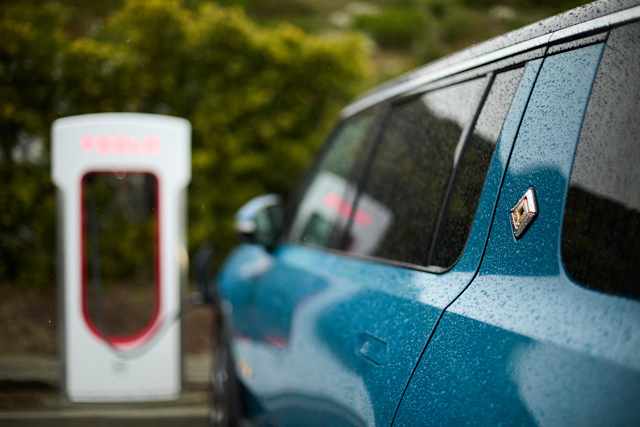
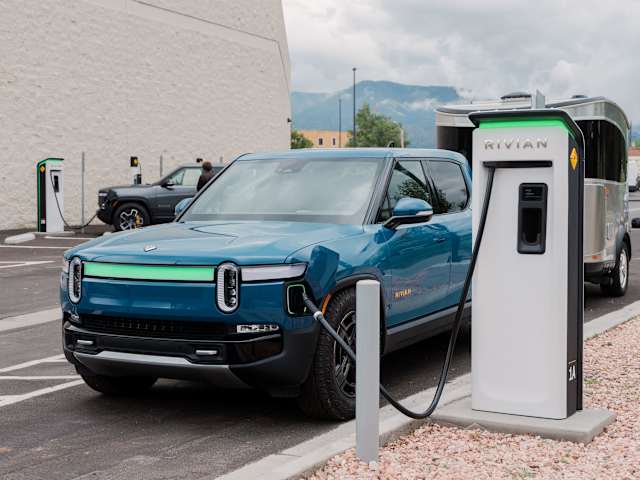
Whether that's street parking, a shared lot or a building with no charging infrastructure yet, a nearby DC fast charger can fill the gap. R2 charges quickly on DC fast charging, going from 10 to 80 percent in under 30 minutes. That's fast enough to make a quick stop on your way home or during a weekly errand run, rather than a dedicated trip. Chances are you live near one of the 73,000 DC fast chargers across North America, including our award-winning Rivian Adventure Network sites. It's not quite the same as waking up to a full battery, but pairing a fast charger near your daily routine with occasional top-offs can work just as well.
Let the Rivian app do the work...
Once you're set up, the Rivian app handles the rest. You can also schedule charging for off-peak hours, when electricity rates are lower. The app's Schedule Recommendation feature looks at your utility's rates and suggests the best times to charge automatically, even if those times shift by season. Set a charge limit of 70 to 80 percent for everyday driving and go to 100 percent for road trips. This helps your battery last longer over time.
The Energy App gives you a clear view of your charging history and how your vehicle is using power, so you always know where things stand.
Charging at home means one less thing to think about. Plug in when you get home. Go to sleep. Wake up ready.
Charging speeds vary based on various factors, including battery type, battery capacity, charging power source, battery state of charge, temperature, charger capacity, weather, site-specific conditions and more. Stated speeds reflect optimal conditions.