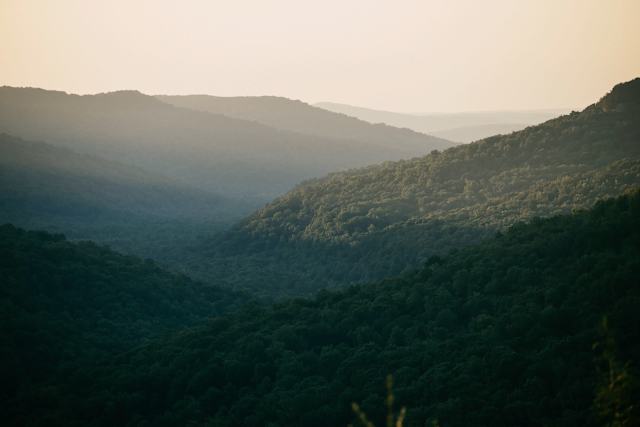
The Joseph H. Williams Tallgrass Prairie Preserve in Oklahoma is home to more than 750 types of plants, 300 species of birds, 80 different mammals – and now, its first Rivian R1T.

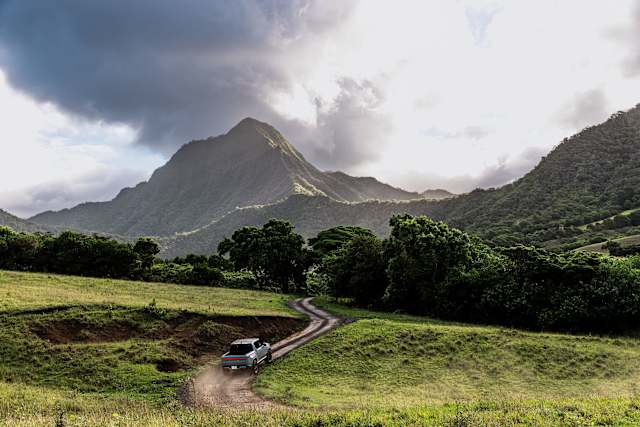
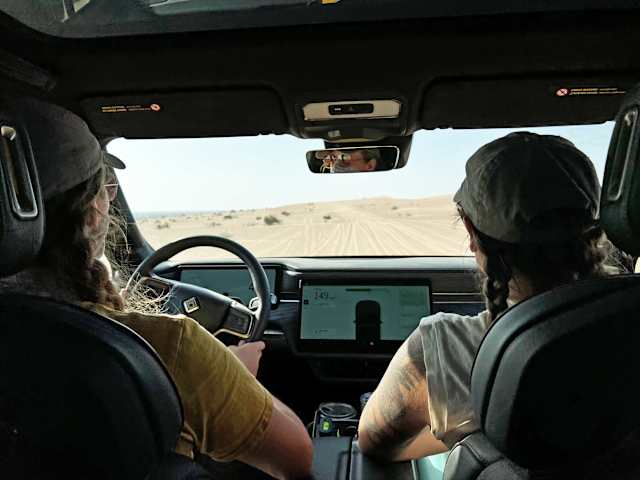
On the truck’s first day of work, Bob Hamilton drove it along the dirt and gravel roads that wind through the preserve, a huge smile on his face.
“It’s just impressive,” said Hamilton, the Tallgrass Initiative's director. “I think it fits right in here.”
At 39,650 acres, the preserve – which The Nature ConservancyOpens in new tab has operated and been working to restore since 1989 – is the single largest stretch of protected tallgrass prairie remaining on the planet.


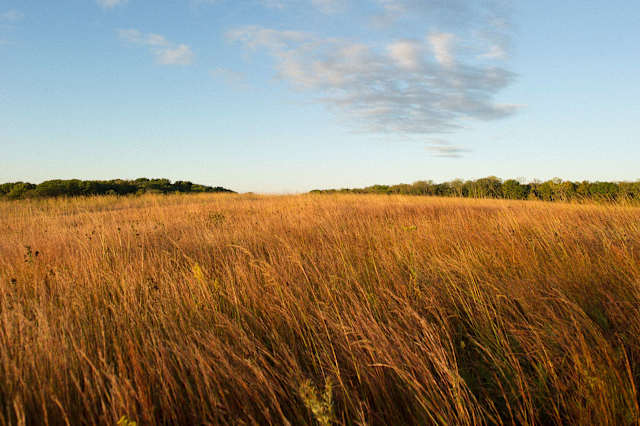
On the Tallgrass Prairie PreserveOpens in new tab, the view through the truck’s windshield might as well have been an expertly painted set from the Rodgers and Hammerstein musical named for this state – a bluebird Oklahoma sky with silvery clouds and even a few hawks making lazy circles.
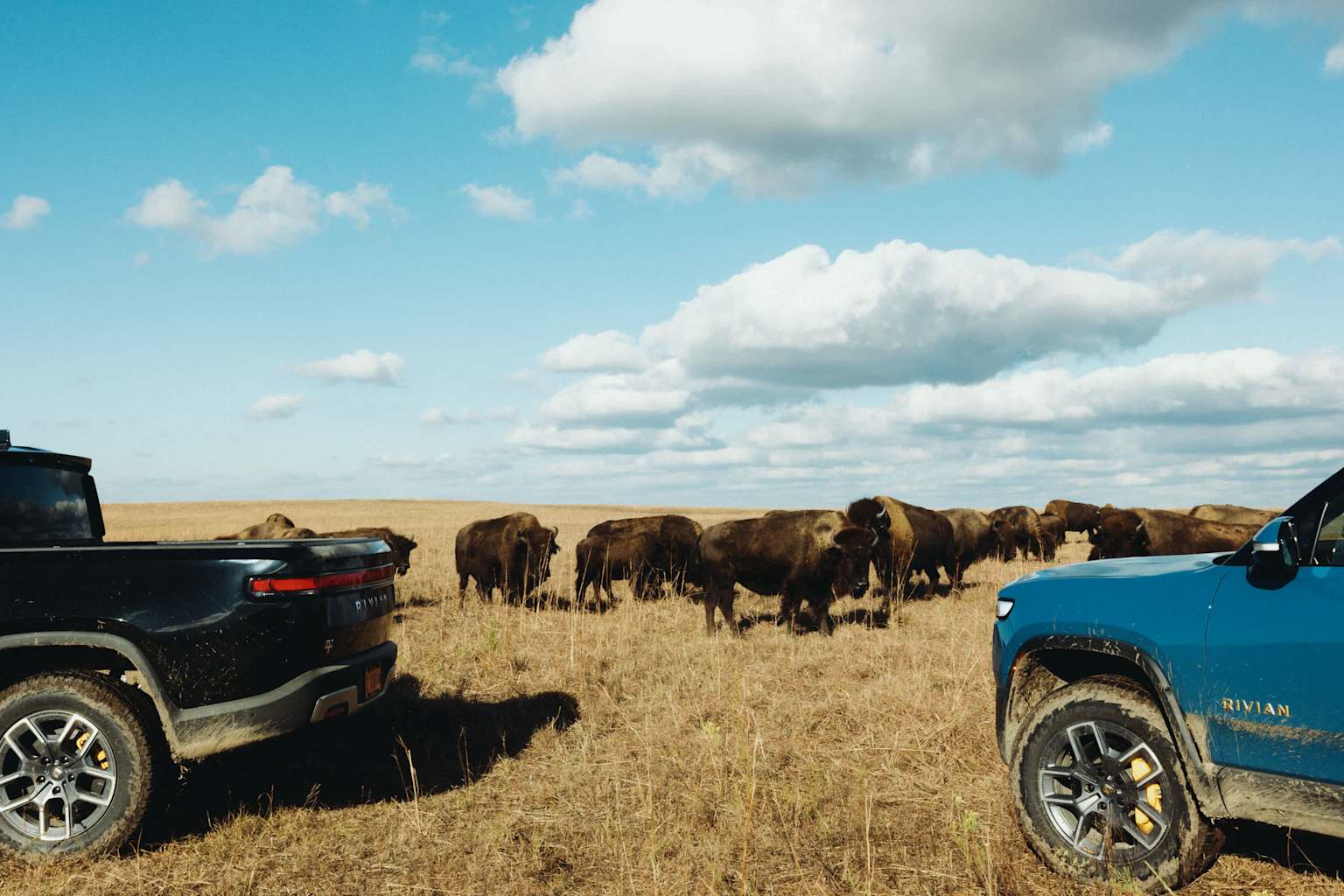
Flanking the truck on either side was a golden sea of prairie grass that stretched to the horizon. It was dotted with preserve’s star attraction, a herd of thousands of free-range bison.


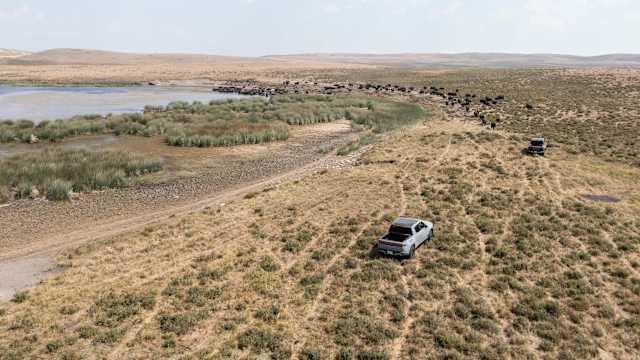
The Rivian moved slowly over the landscape, at times surrounded on all sides by the animals as they lumbered in the same direction. They seemed entirely disinterested in the truck and more often than not, the herd’s collective grunts and snorts eclipsed the sounds of tires on gravel and the R1T’s soft, electric hum.
“It's just impressive. I think it fits right in here.”


TNC has matured and evolved over the last 70 years, Bob said. As the organization expanded its efforts to preserve land, water and biodiversity, it became clear that mitigating climate change would need to become part of the equation as well.


“Biological diversity is still a primary concern of ours, but there was this growing awareness of, 'Oh geez, what are we doing?' We being humankind. We've got to address climate change, too,” Hamilton said, stopping the truck to let two bison amble across the road chased by a calf born this summer. “So, it’s great to have a partner who has the same goals, and especially with the kind of vehicle that can fit in with our program out here.”

“We’ve got to address climate change, too. So, it’s great to have a partner who has the same goals.”
The Tallgrass truck
The preserve’s new R1T is an exciting next stop in the partnership between Rivian and TNC. Big picture and long-term, the collaboration aims to leverage the capabilities and many overlapping goals of both organizations.
But trucks – trucks are a great place to start. TNC manages about 5.7 million acres of land across the United States with wildly diverse terrain. And the quiet, off-road capable, emissions-free R1T is uniquely equipped for use in sensitive ecological areas. Match made.
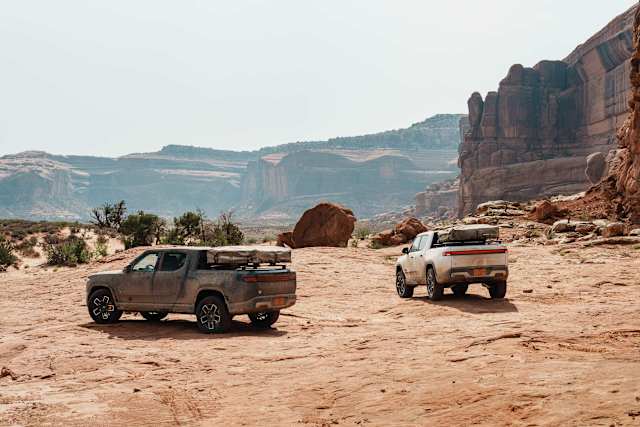
Rivian has delivered trucks to three other TNC preserves – Tensleep PreserveOpens in new tab in Wyoming, the Disney Wilderness PreserveOpens in new tab in Florida and the Jack and Laura Dangermond PreserveOpens in new tab in California, also installing Rivian Waypoints chargers for TNC vehicles and preserve visitors.
“It’s not just an opportunity to show off the vehicle, but to meet with an amazing team focused on something so important."
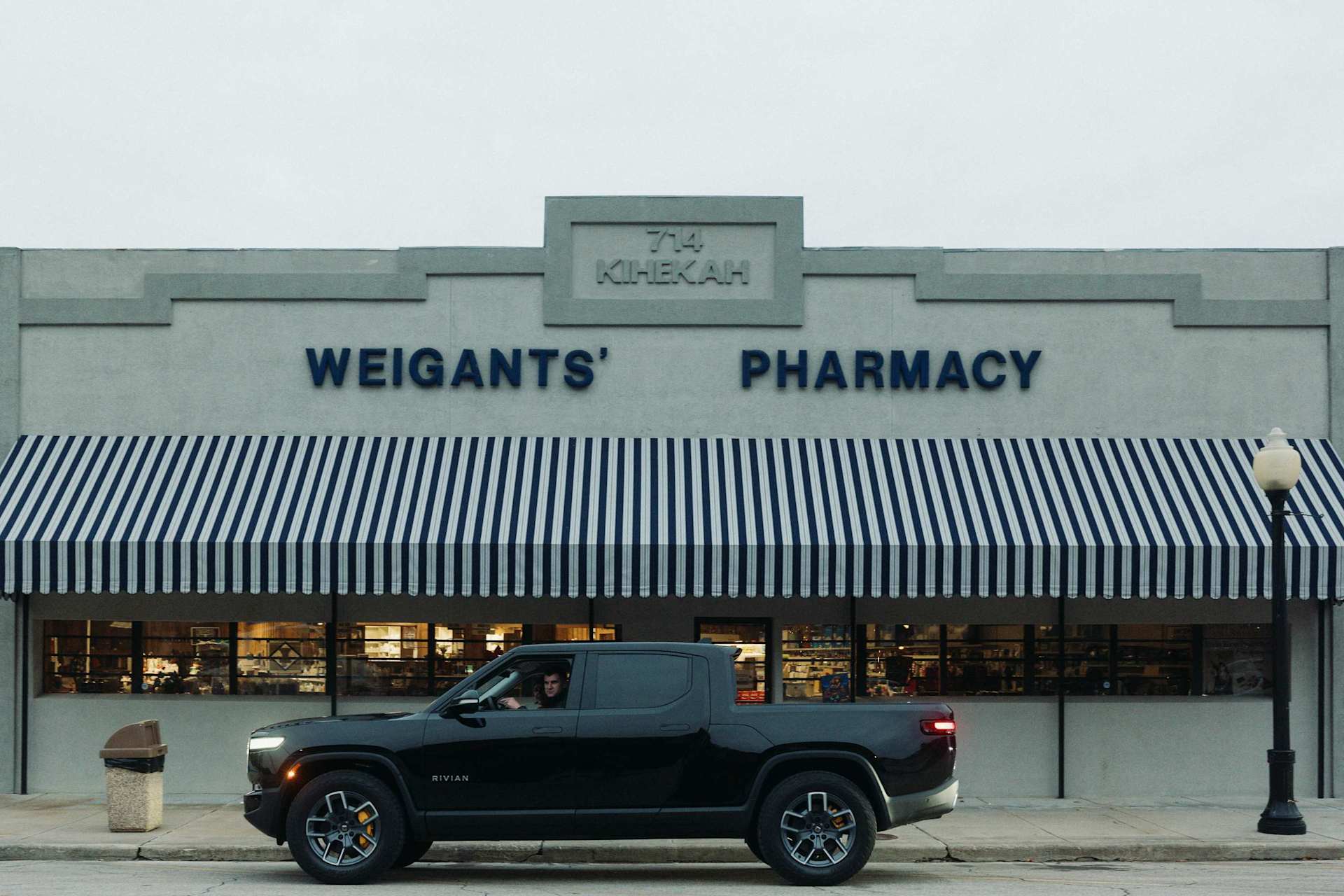
The night before officially delivering TNC's first R1T to the Tallgrass Prairie Preserve, Brian Gase drove the truck (tailed by a second Rivian – his ride home) into nearby Pawhuska, Oklahoma, and plugged in at the town’s charging station.
In a couple of hours, he and James Chen, Rivian’s vice president of public policy, would meet up with the team from TNC and give them a first look at their new truck, something they’d been looking forward to for months.
“It’s not just an opportunity to show off the vehicle, but to meet with an amazing team focused on something so important,” said Brian, a Rivian chief engineer.
“Leaving the truck here feels like watching a kid go off to school. You hope they will be the exceptional creature you know they are, and that they will get along and make new friends and have new memories and meaningful experiences,” he said. “At Tallgrass, we are sending a vehicle into a world where large, heavy-duty diesel trucks come equipped with 2,000-lb. feed containers and bison brush guards. Our fast, tech-savvy little truck will be unique in that world, but we think it will do well, and we hope they love it.”
As far as first meetings go, the backdrop of historic Pawhuska – a tiny town with a big history that intertwines the Osage Nation, cattle ranching, homesteaders, cowboys and the discovery of oil – could not have been more cinematic (in fact, Martin Scorsese and Leonardo DiCaprio recently filmed in this spot).
The Rivian trucks made their way down Kihekah Avenue (the Osage word for “chief”), a wide street lined in red-brick buildings and parked near the end, where a gateway topped with bison silhouettes welcomes visitors to the edge of the tallgrass prairie. Tomorrow, the truck would pass through that gate to its new home. But tonight, the fun was in town.


As dusk fell, and the trucks lit the street around them with their trademark light bars and stadium headlights, a small crowd started to gather – mostly the TNC team but a couple of local passersby as well.
“How long does it take to charge?”
“How do you open the Gear Tunnel?”
“What kind of tires are these?”
“Wait, it comes with an air compressor?”


Whether on the road, stopped and charging or illuminating a block in small-town Oklahoma, the R1T is a vehicle that tends to inspire curiosity. This is one of Brian’s favorite things. He moved around the truck, answering the TNC team’s questions, sharing performance specs and demonstrating various features.
He showed off the truck’s sound system (with the help of AC/DC’s “Thunderstruck,” a special request), opened storage compartments and pushed buttons, encouraging the TNC team to do the same. They opened the Gear Tunnel, climbed in and out of the bed and the front and the back seats, used the center console to play music and flip the side mirrors in and out, opened and closed the front trunk.
“That is quite the machine,” said Harvey Payne, the Tallgrass Prairie Preserve’s community relations coordinator, as he stood on the sidewalk looking at the truck.

The R1T color Midnight was inspired by the time of night when the sky is darkest and star gazing is at its best. Tallgrass’s new ride, as it turns out, also happens to be the color of nighttime on the prairie.
“This area is what the airline pilots call ‘The Black Hole,’ because when you’re flying over this part of the world, there aren’t any lights,” Harvey said the next morning, gesturing out to the inky darkness as the trucks drove out onto the preserve well before dawn. “We get such good, dark skies at night. You’d be amazed at how many people come up here to the preserve to do astrophotography.”
As the sunrise slowly lit the rolling hills and the bison huddled in small groups across the landscape, Harvey and others shared stories from what he calls “a multi-act play” – the land and its past, the people who have lived and worked it, the symbiosis of the bison and the prairie.

“For starters, you can't tell the story of the Tallgrass Prairie and this part of the world without telling the native American story, because they were here first,” he said. “We work closely with the Osage, especially the chief and the spiritual leader. They participate in a lot of functions at the preserve and, like us, have a very deep love of the land.”
The land. Spending time on the prairie will erase any future urge to make a “flyover country” crack. There is nothing plain about The Great PlainsOpens in new tab.
“You know, it's like anything else -- you get out of it what you put into it and you have to really invest yourself in the prairie,” Harvey said. “It's not like looking at the Tetons saying, ‘Wow, that's magnificent.’ The Prairie takes some study and some time and some research, but it is so multidimensional.”
Once a landscape that spanned 14 states from Texas to Minnesota, grassland was an ecosystem squarely in the path of America’s westward expansion in the 1800s. Over the centuries, acres and acres of prairie were plowed and developed to become homesteads, farmland, ranches, industrial complexes and suburbs. Only four percent of tallgrass prairie remains. The Tallgrass Preserve represents a majority of that four percent.
“The prairies, they are ingrained in our American myth, right? I want us to honor that part of our American ethos and protect that,” said Katie Gillies, TNC Oklahoma's director of conservation. “It's unfortunate that, to date, we've just seen prairies as something to be developed. I want people to change their mind on that. Because we don't have much left, and when they're gone, they're gone.”
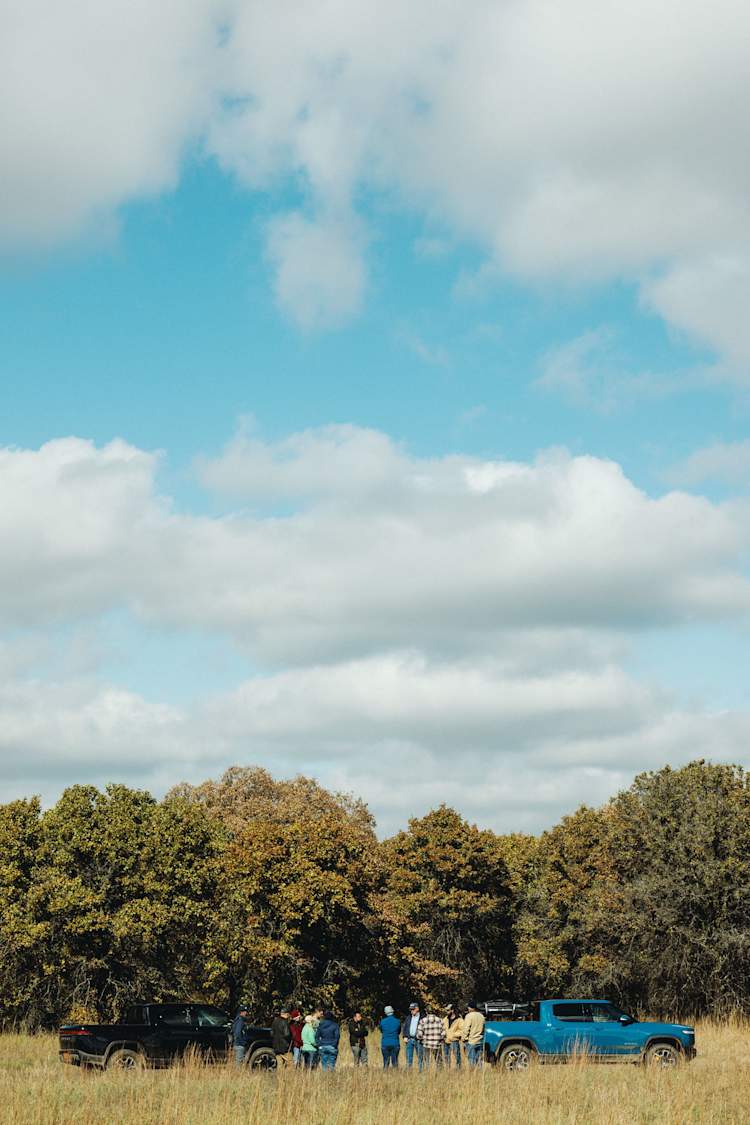
“You have to really invest yourself in the prairie. The Prairie takes some study and some time and some research, but it is so multidimensional.”
Restoring and preserving prairie involves a careful balance of managing the things that disturb it. Some disturbances, like invasive plant species such as sericea lespedeza, a flowering plant from Japan, would overtake the native grasses if left unchecked, and the preserve team are constantly trying to beat it back. Others, like fire and grazing, are forces of nature the prairie needs to thrive. The preserve crew uses controlled fires to burn different patches of the prairie during different seasons. Post-fire, the blackened land will quickly “green up” with delicious, high-quality grasses bison love.
Bison are a critical part of keeping the prairie ecosystem healthy. They aerate the soil with their hooves as they graze and help disperse the seeds of native plants. In 1993, TNC reintroduced bison to Tallgrass to help balance the ecosystem. The herd has since grown to 2,500 bison who, apart from one herd check a year, are left to roam and live their best bison lives.
Bison are majestic creatures from any distance, but up close, they are something else entirely – each a similar but entirely unique arrangement of fur, mane and hooves.
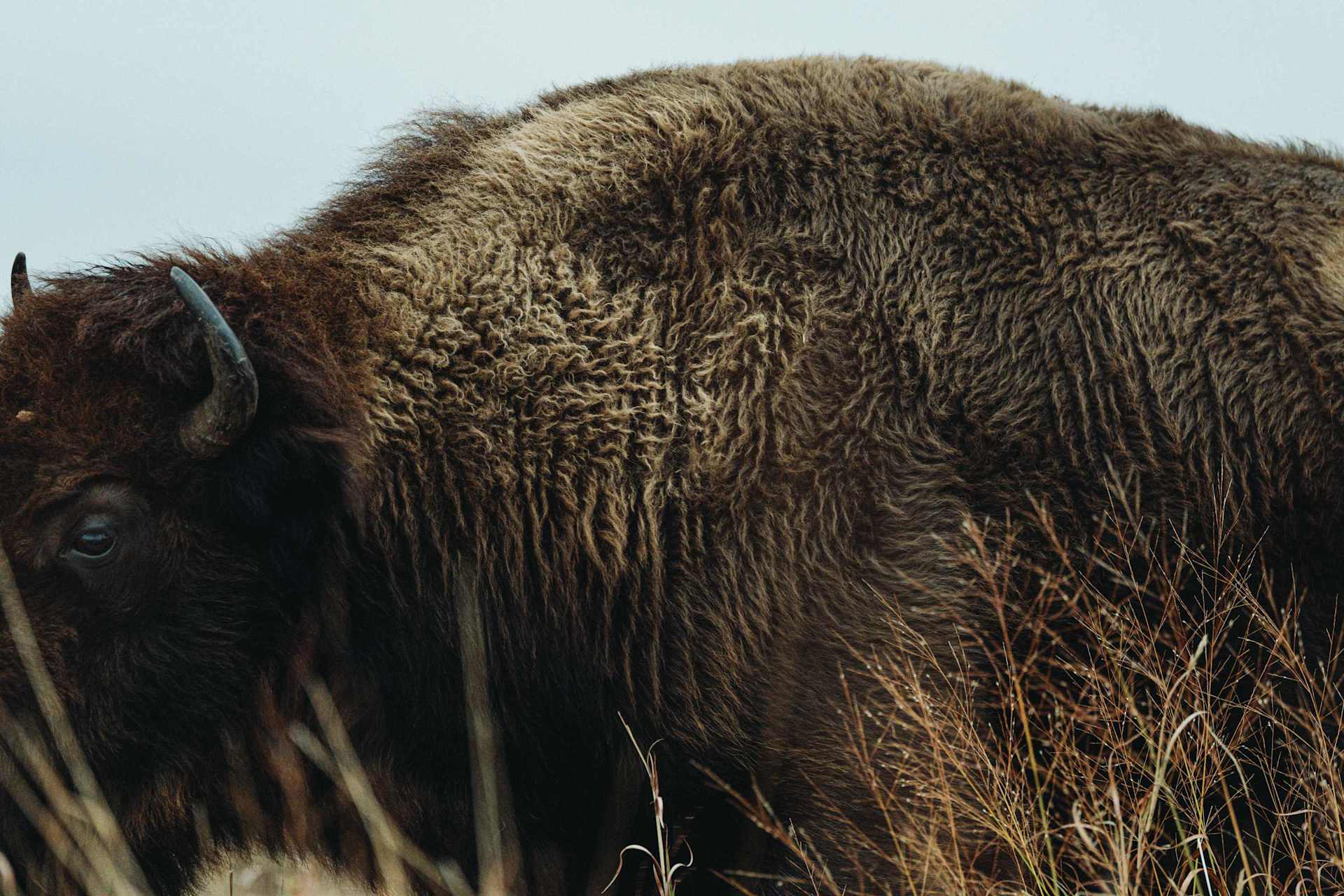
“At first people around here were somewhat apprehensive about the bison, like, ‘Yeah, they're funny looking. They sure got a big chest and a little butt. This is cattle country. This isn't bison country. What are you guys doing?’” said Harvey, who grew up on a cattle ranch not far from the land that in the eighties would become the preserve. “Well, bison have been here for thousands of years. And cattle have been here for well over a hundred. So …”
It wasn’t all that long ago that bison were teetering on the brink of extinction. By the late 1800s, there were fewer bison in the entire United States than currently live at Tallgrass – the species population dwindled to 541. It rebounded, in part, with help from cattle ranchers who caught some of the remaining bison and bred them to help restore the species.
Harvey said the conservation story of bison in general, and the Tallgrass Prairie Preserve specifically, is one of hope. Both demonstrate that with thoughtfulness and careful management, it is possible to bring species and ecosystems back from the edge.
“I think the recovery of bison is a wonderful success story, although also a tragic one in how we got to that point,” Harvey said. “So often humans don't realize or appreciate what we have until we're in danger of losing it. It’s so much better to assess situations and try to preserve and conserve before you get to a critical point.”
“So often humans don’t realize or appreciate what we have until we’re in danger of losing it.”

The R1T’s first day at Tallgrass was a full one.
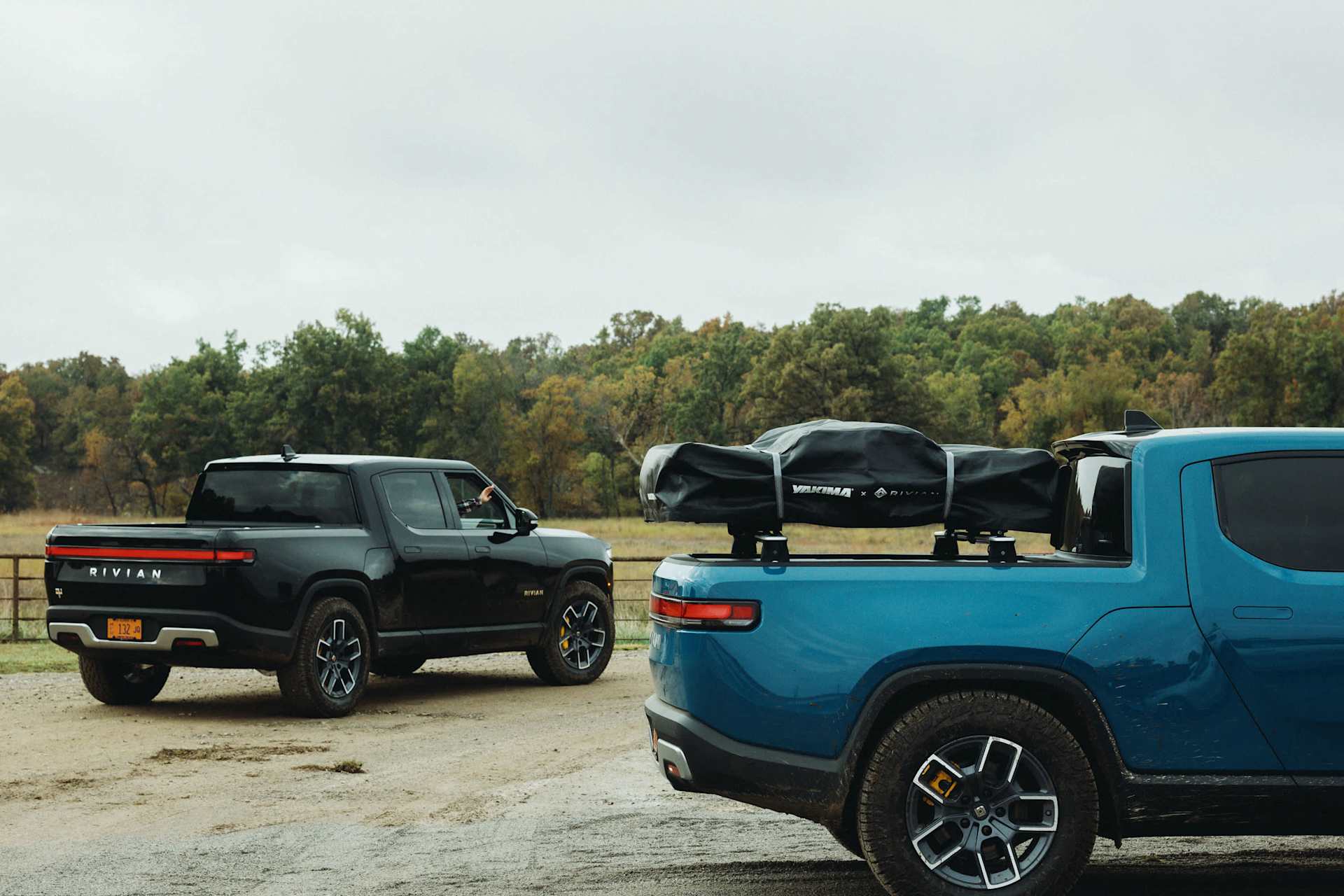
After watching the sunrise and moving among the preserve’s bison, the team drove to one of the highest points in the area, Chicken Hill, for lunch together and a demonstration of the Rivian Camp Kitchen and Rooftop Tent.
Discussion naturally turned to Rivan and TNC’s shared goals, and to thinking about future opportunities to work together. Bob and Katie hope that one of those areas will be renewable energy. As the transportation industry transitions to electric power, and companies and developers seek out ways to operate more carbon neutrally, there will be more of a focus on generating renewable energy like wind and solar.


“We’ve got a lot of opportunities to work together. For one, we want to see renewable energy deployment accelerated, and to help people and companies think about where they’re getting their energy to make sure it’s from a sustainable place,” Katie said. “But we also want to help renewable energy companies think about where they’re putting up wind turbines and solar panels to make sure it won’t impact wildlife and biodiversity.”
For example, it may seem natural to put wind turbines on the prairie “where the wind comes sweeping down the plains” as the song goes, but conservationists have found that adding vertical objects like a 400-foot turbine to a prairie landscape can have an adverse effect on wildlife.
“What is the primary consideration of real estate? Location, location, location. It’s the same with renewable energy,” Bob said. “it’s important to remember that just because it’s creating more sustainable energy, it’s not impact-free. There’s still a footprint. There are some natural places to think about siting things like wind turbines and solar and other types of renewable energy where they can live more harmoniously with the environment around them. We are helping companies and developers select sitesOpens in new tab to ensure energy options now and in the future are more ecologically friendly.”
After lunch, Katie, Bob and others on the Tallgrass team spent time driving the truck, getting a feel for its handling and performance in situations.
“We took it out in all the mud holes we could find, and it rode like a dream through them,” Katie said. “And the ride is incredibly smooth on the bumpy county roads and two tracks – smoother than any traditional truck I’ve taken into the field.”


And as the TNC uses Rivian vehicles for field work, its team will share vehicle-collected data — real-world, day-to-day use data — as well as their personal feedback and impressions. As Brian Gase said before bidding the Tallgrass staff farewell, “Drive it lots. Push it hard. And be sure to let us know what you think.”
Meanwhile, Katie said she’s thrilled to have the chance to put an entirely new kind of truck to work, and to offer EV charging in the Tallgrass parking lot.
“This vehicle is smart, powerful, responsive and fun to drive across the Osage hills,” Katie said. “It’s turning heads in Pawhuska and giving us a chance to talk about the shared conservation goals of TNC and Rivian. We hope the chargers will drive even more visitation to this special part of the prairie.”