R2 is designed to take you far. For those longer adventures, that means charging along the way, which is why we’ve made charging easy to find and easy to use. Here’s what you need to know about fast charging on the go.
What is fast charging?
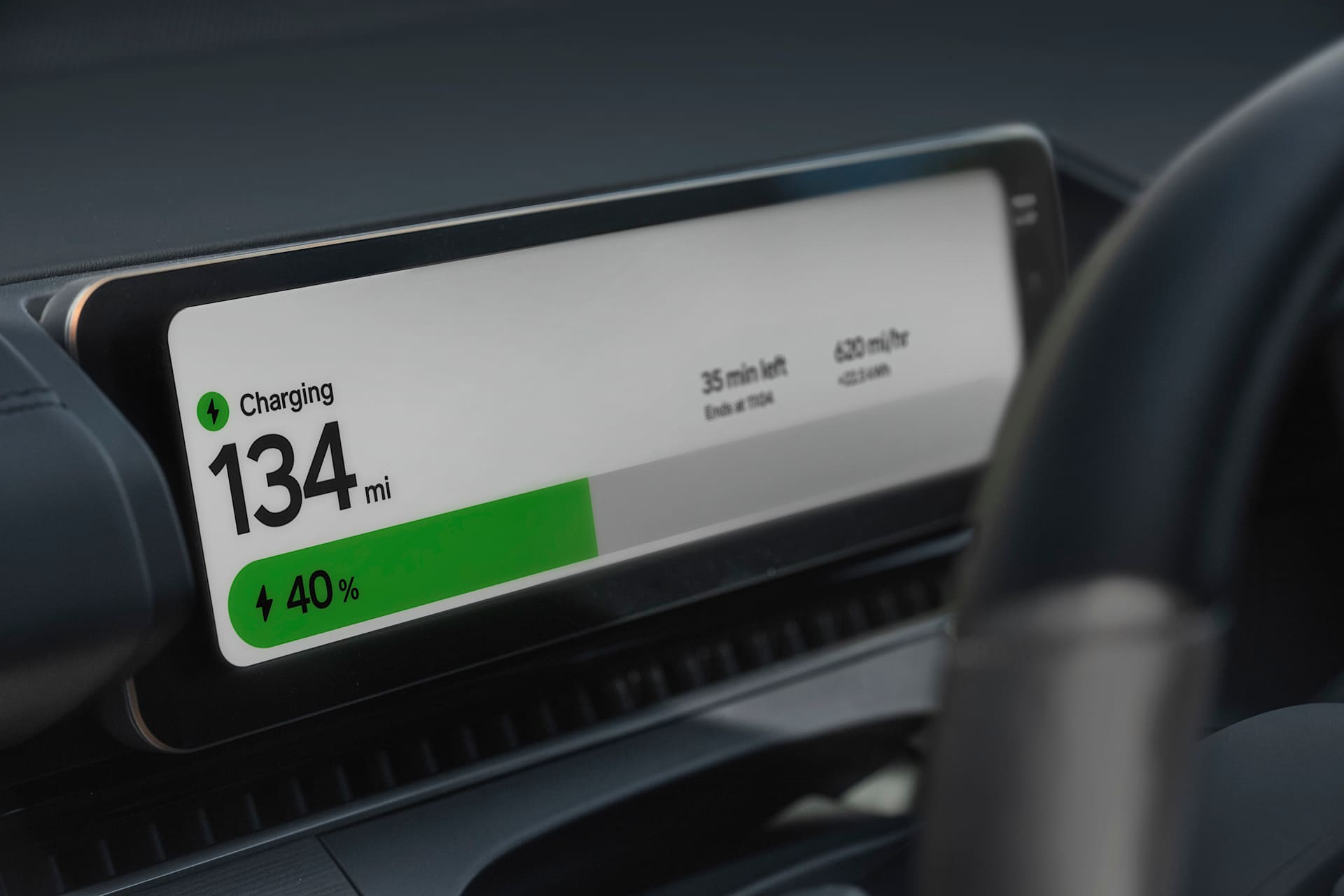
Fast charging refers to Direct Current Fast Charging (DCFC), also known as Level 3 charging. These chargers are the fastest charging option available to drivers. They are built out along highways and major thoroughfares. Under optimal conditions, R2 can add up to 150 miles of range in about 15 minutes at a high-powered station. A charge from 10 percent to 80 percent takes under 30 minutes.¹
Why it’s great
Fast charging on a road trip is simple. Our trip planner will map out the charge stops you need along the way. You plug in every couple-hundred miles, grab a coffee or a snack, and by the time you're back, the car is ready for the next leg of your journey.²
Finding a fast charger
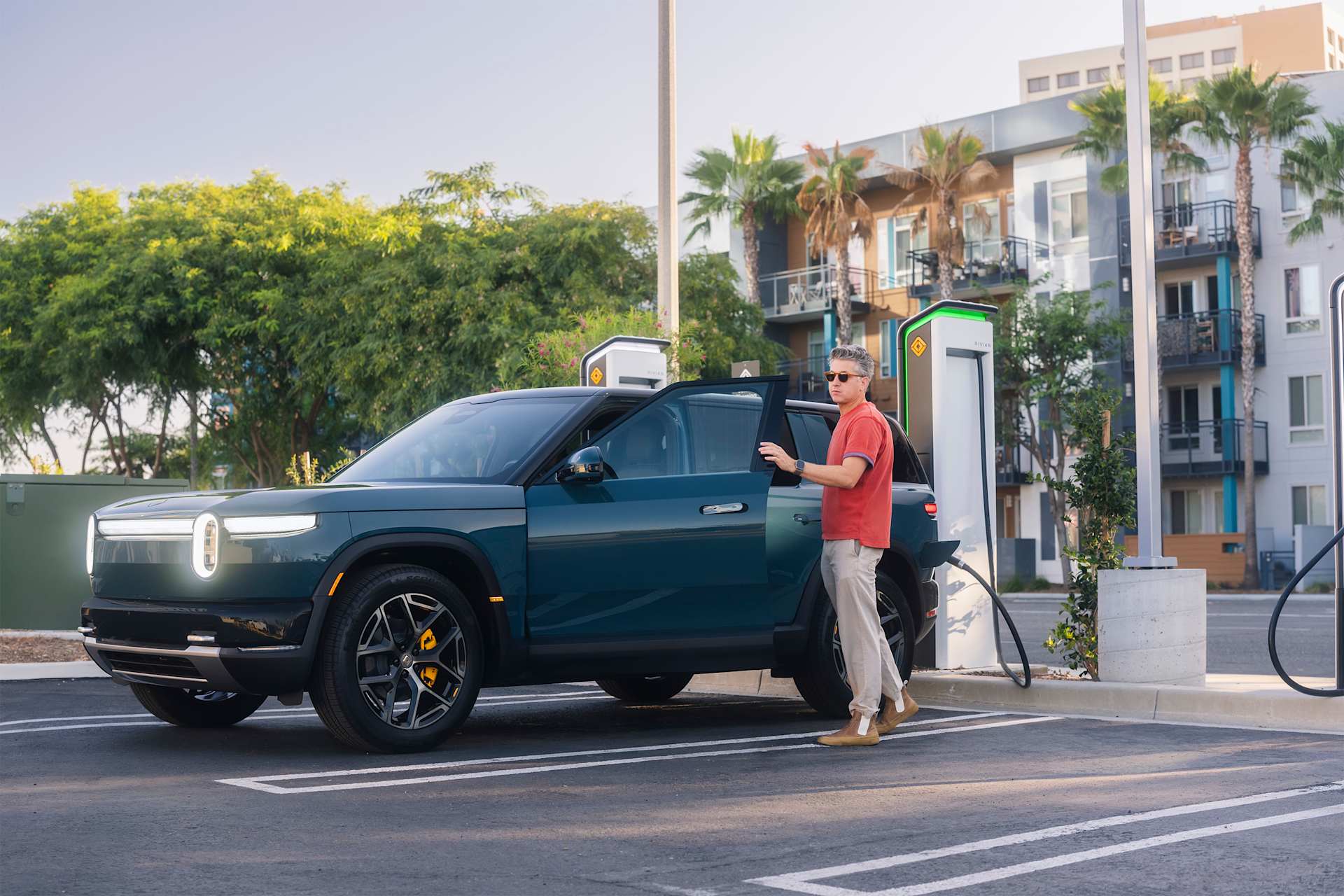
R2 can charge at over 70,000 EV fast chargers across more than 15,000 locations in the U.S. today. Rivian makes finding them easy. Simply use your app or in-vehicle navigation and you can find and route to every charger in your area. We also give you information on charger reliability, availability and nearby amenities. Our Charging Score allows drivers to filter out unreliable chargers so you can feel confident that every charger you visit will work.
You can also view the full charging map here.
The Rivian Adventure Network, designed for R2
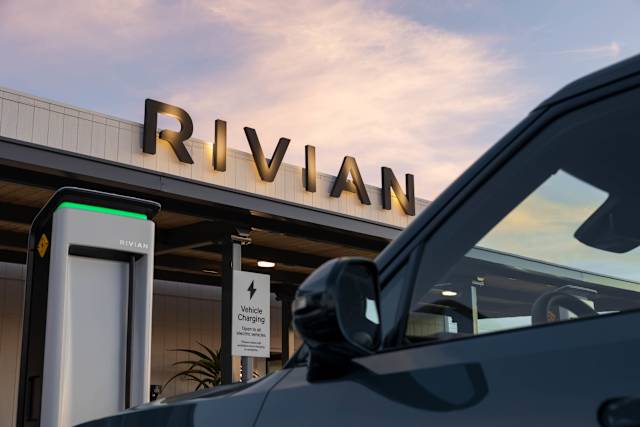
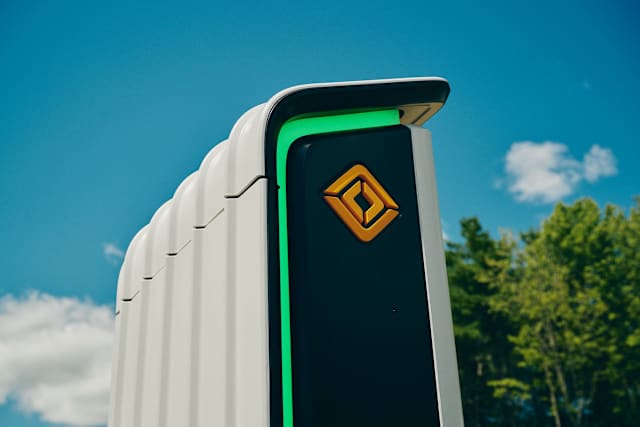
At Rivian, we are investing in and growing our own award winning DC fast charging network, the Adventure Network. Designed and manufactured alongside our vehicles in Normal, Illinois, R2 drivers can simply pull up, plug in and start charging. Operating at over 150 sites with over 1,100 chargers, our network is built to support all your adventures, from the weekly groceries to the open plains. The Rivian Adventure Network is compatible with all EVs in North America, including both NACS and CCS ports.
Types of charge ports and plugs
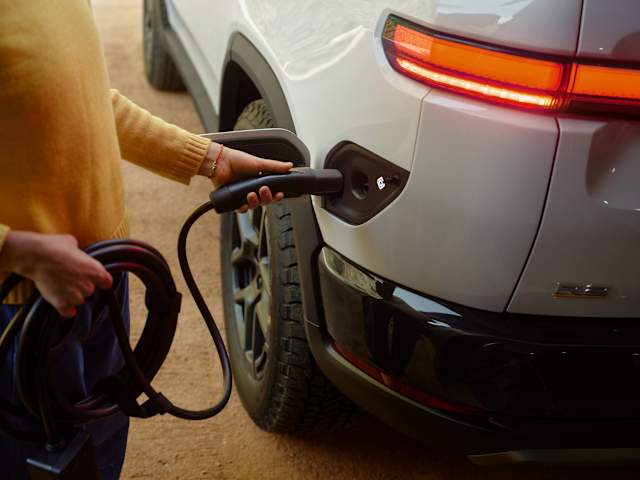
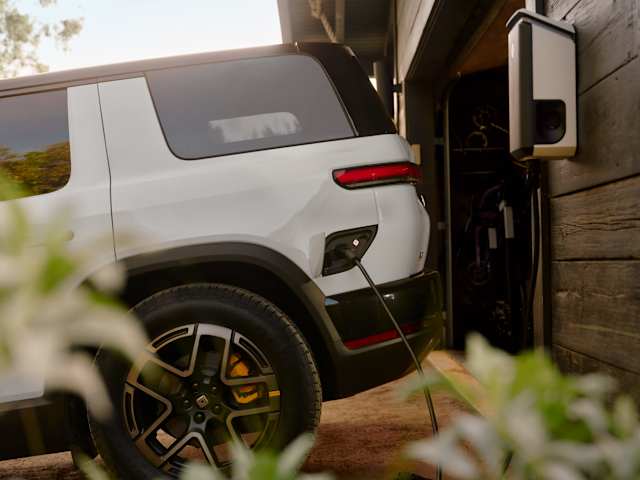
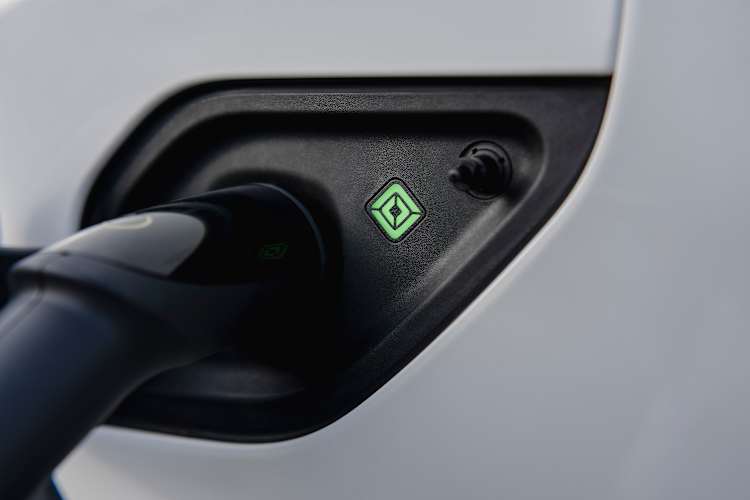
Like all electrical devices, R2 needs a matching outlet to charge. There are two common plug/outlet standards to be aware of in North America, but you’ll find compatibility is simply a matter of having the right adapter.³
North American Charging Standard (NACS)
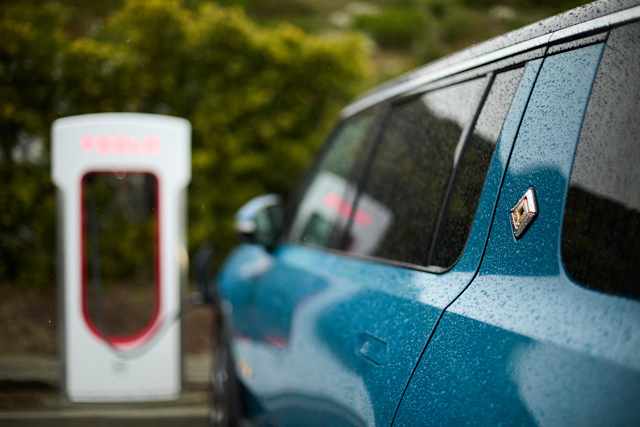
R2, along with all model year 2026+ Rivian vehicles, comes equipped with a NACS port. That means new Rivian vehicles can natively use Rivian Adventure Network chargers and the Tesla Supercharger network for DC fast charging.
Combined Charging System (CCS)
Most non-Tesla charging stations opened before 2026 used the CCS standard, making it one of the most common fast charging types in North America. R2 drivers may want to carry a compatible combo CCS DC adapter to take advantage of CCS chargers.
Charging lingo
Kilowatt (kW) - A unit of power that measures the rate at which electricity is being delivered at any given moment. Think of it as the “flow rate.”
Kilowatt hour (kWh) - A unit of energy that measures the total amount of electricity stored or used over time. Think of it as the size of your “fuel tank.”
Voltage (V) - The electrical “pressure” that pushes current through the system. Think of it as “water pressure” in the line.
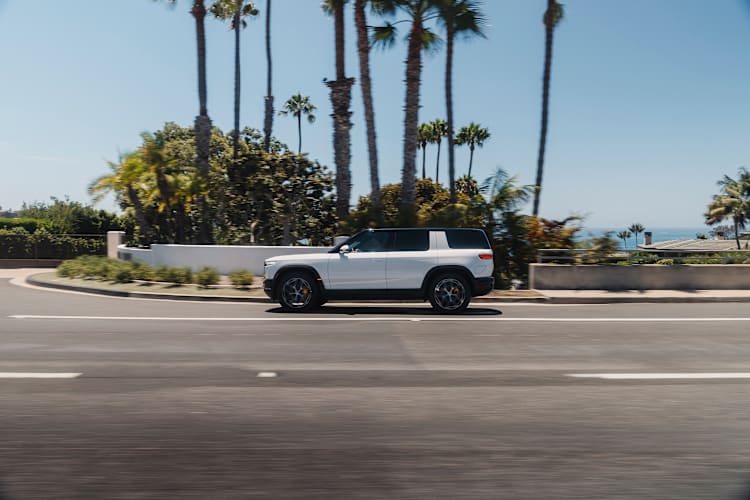
When you need to go far fast, R2 has you covered. Fast charging speeds, tens of thousands of compatible chargers and our convenient digital tools help give you confidence wherever the road takes you.
Visit our R2 charging page to learn more.
Charging speeds vary based on various factors, including battery type, battery capacity, charging power source, battery state of charge, temperature, charger capacity, weather, site-specific conditions and more. Stated speeds reflect optimal conditions.
Charging speed can vary based on a wide range of factors, including the vehicle battery type, charging power source, load sharing, battery state of charge, ambient temperature and more.
Charging network access and compatibility vary by station, vehicle configuration, and network availability.