Long before New York City was The Big Apple, it was The Big Oyster.
“The history of the New York oyster is a history of New York itself,” wrote Mark Kurlansky in his book, The Big OysterOpens in new tab. “Its wealth, its strength, its excitement, its greed, its thoughtfulness, its destructiveness, its blindness, and—as any New Yorker will tell you—its filth.”
Biologists estimate New York Harbor was once home to half the world’s oysters. For hundreds of years, the Lenape tribe inhabited the Northeastern Woodlands, one of the world's most prosperous and most abundant ecosystems, and both tribe and ecosystem thrived. When colonialist settlers arrived, the Hudson River estuary was so brimming with bivalves that oysters were sold by street corner vendors, heavily featured on restaurant menus and some streets were even paved with shells.
But with those settlers and the city’s exploding population came overfishing, industrialized pollution and untreated sewage flowing freely into the river. It took less than a hundred years to wipe out the New York oyster population. But by the 1920s, the once unparalleled and abundant ecosystem had collapsed and the city declared its oysters too toxic to eat. By the 1990s, oysters were functionally extinct in New York Harbor.
Enter: Billion Oyster ProjectOpens in new tab.


Founded in 2014, the nonprofit aims to restore one billion oysters to New York Harbor by 2035 through public education initiatives. The organization and its volunteers have introduced 122 million oysters to date, not for eating, but for the essential ecosystem services oysters provide: filtering water, providing a habitat for other marine creatures, and solidifying the shoreline to help prevent erosion and protect the city from storm surges.
“Billion Oyster Project has grown from the belief that if we are to continue living, working, teaching, and learning on this planet, we must fundamentally change how humans interact with nature,” said Pete Malinowski, co-founder and executive director of Billion Oyster Project.
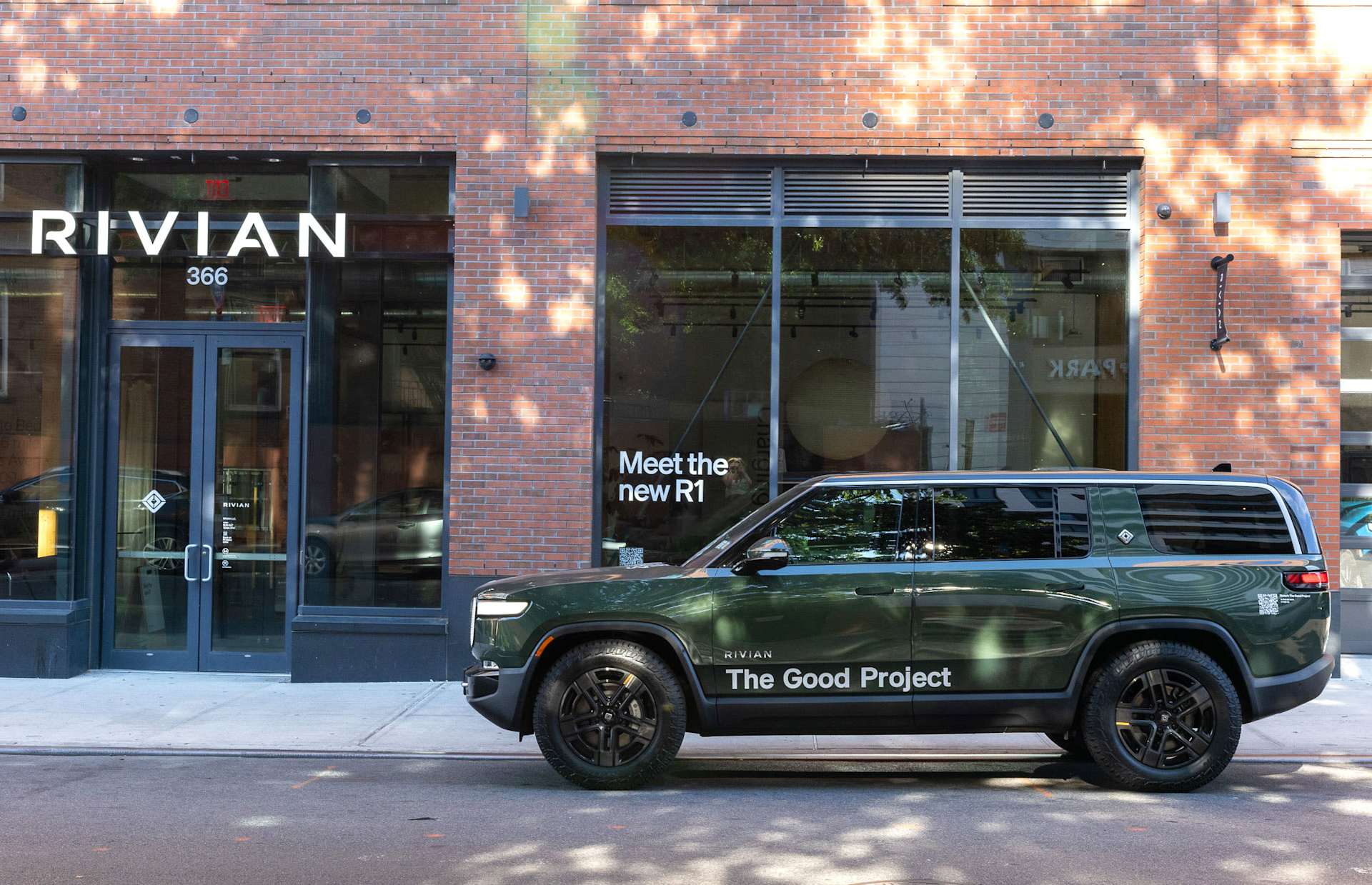
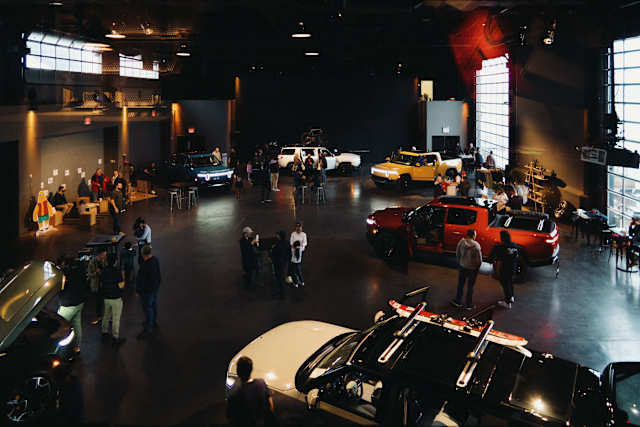
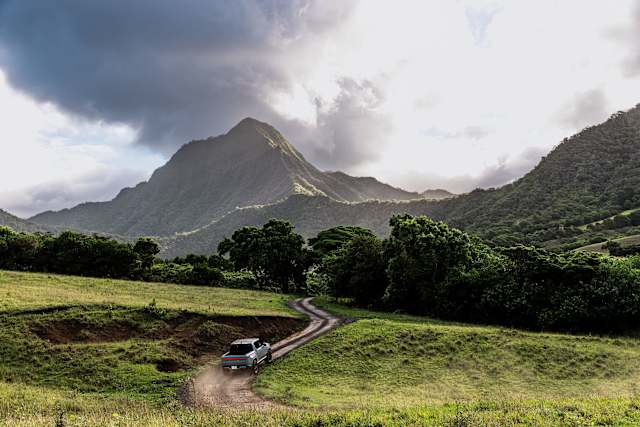
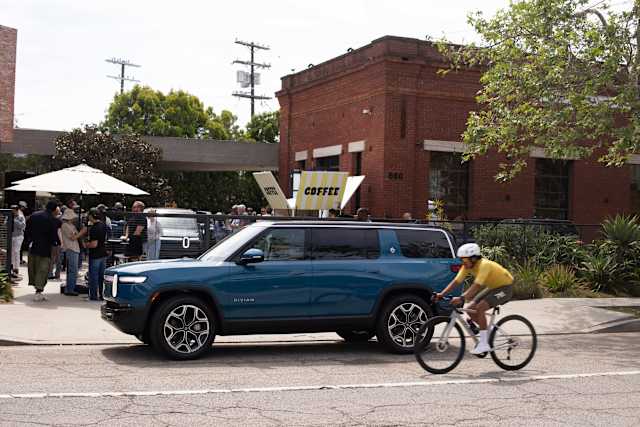
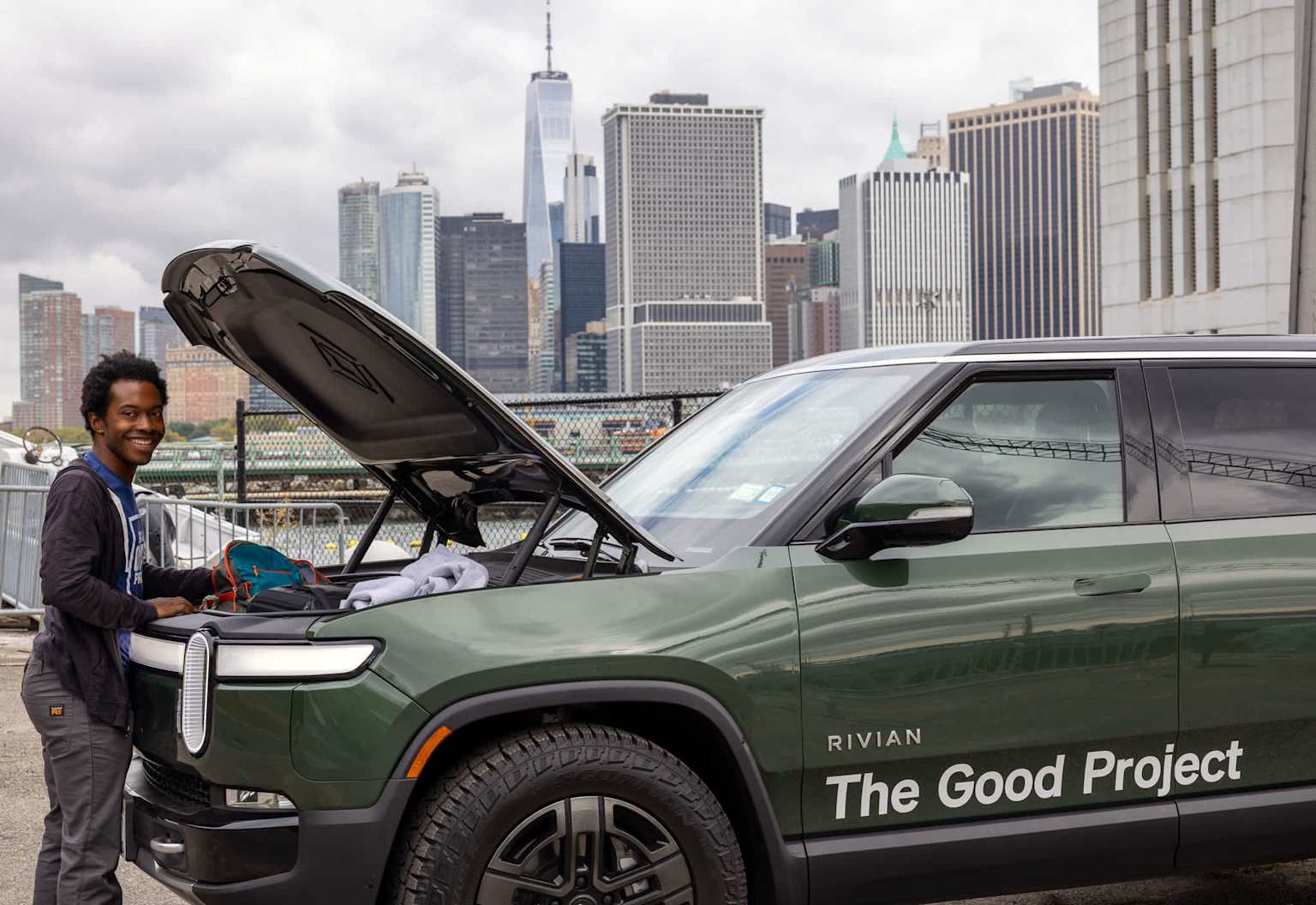
We’re thrilled Billion Oyster Project was the first official recipient of Rivian’s new community vehicle loan program, The Good Project. Beginning this month at Rivian spaces in Brooklyn, Denver, Austin and Atlanta, we’re making an R1 available in each city for qualifying nonprofit organizations to borrow on a short-term basis. We can’t wait to see all the ways The Good Project vehicles will be put to work in support of the greater good, particularly work that aligns with Rivian’s mission to Keep the World Adventurous Forever. Learn more about The Good Project here.
Join us as we ride along with Billion Oyster Project in their borrowed Rivian R1S from The Good Project for the exciting and busy week leading up to their single biggest fundraiser of the year.

Coney Island Beach Cleanup
The first stop for The Good Project R1S was a community beach cleanup at Coney Island’s Kaiser Park. The event, a local effort for International Coastal Cleanup Day, drew a massive crowd of students of all ages from local schools and plenty of adults.
As the tide receded, it revealed a constellation of trash strewn across the shoreline, but not for long. The participants combed the beach, filling trash bags with wrappers, straws, water bottles, confetti-sized bits of plastic and more. They also measured and photographed the horseshoe crabs they found, for help tracking the species.


“Billion Oyster Project has grown from the belief that if we are to continue living, working, teaching, and learning on this planet, we must fundamentally change how humans interact with nature.”

Ferrying to Governors Island
Billion Oyster Project is very much an organization on the go, with team members, volunteers and students regularly making their way around the city’s 520 miles of shoreline and even diving into the harbor itself to build oyster reefs. But the official Billion Oyster Project headquarters is a big, yellow house on Governors Island.
A short but postcard-perfect ferry ride from Lower Manhattan and Brooklyn, Governors Island is a former Coast Guard command that was transferred to the city and is now home to a variety of education and arts organizations.
On this weekday morning, the yellow house was bustling with activity. Volunteers were headed into the house to load up supplies for the Billion Oyster Party later that week as a group of high school students was wandering out.
“An adult oyster can filter a bathtub’s worth of water [up to 50 gallons] in a single day,” a team member told the students, “so the next time you take a bath, think about dropping an oyster in there with you.”


Underwater Oyster Party
“That’s the thing about everything living in the harbor – most of it bites,” Zeke said, laughing, as he pulled an oyster cage from the water at Brooklyn Bridge Park and a tiny blue crab skittered onto his palm. It’s not unusual, when pulling an Oyster Research Station cage from the water, to find a wide variety of marine life has joined the oyster party – crabs, sea squirts, sea bass, seahorses, snails, jellyfish, and even wild oysters.
Each wire cage has a bed of recycled oyster shells along the bottom. The cages are tagged and lowered into the water, but can easily be pulled up to use for educational moments, but also to monitor the health of the ecosystem below – oyster growth, yes, but also other marine life and overall water quality.
As Zeke and Marcel lowered cages back into the water, they heard a horn blast and looked up – they’d been spotted by the Billion Oyster Project boat working in an adjacent cove. The boat’s pilot waved, as did two divers in the water who were checking on oyster reefs.


Water, Water Everywhere
Billion Oyster Project oysters are not for eating, just as New York Harbor water is not for drinking, said Cody Herrmann, a senior community science coordinator for Billion Oyster Project. Cody takes frequent water samples all over New York City shorelines.
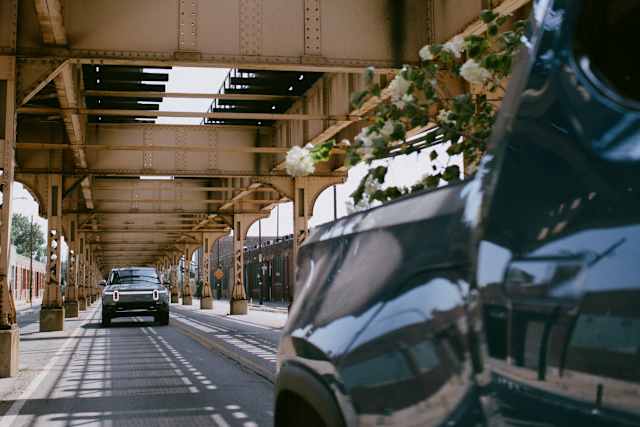
Normally she travels by bike with her supplies – glass bottles, telescoping arm, rubber gloves and cooler – but on a rainy Wednesday was glad to have The Good Project R1S to travel around collecting water samples.


The 10th Anniversary Billion Oyster Party
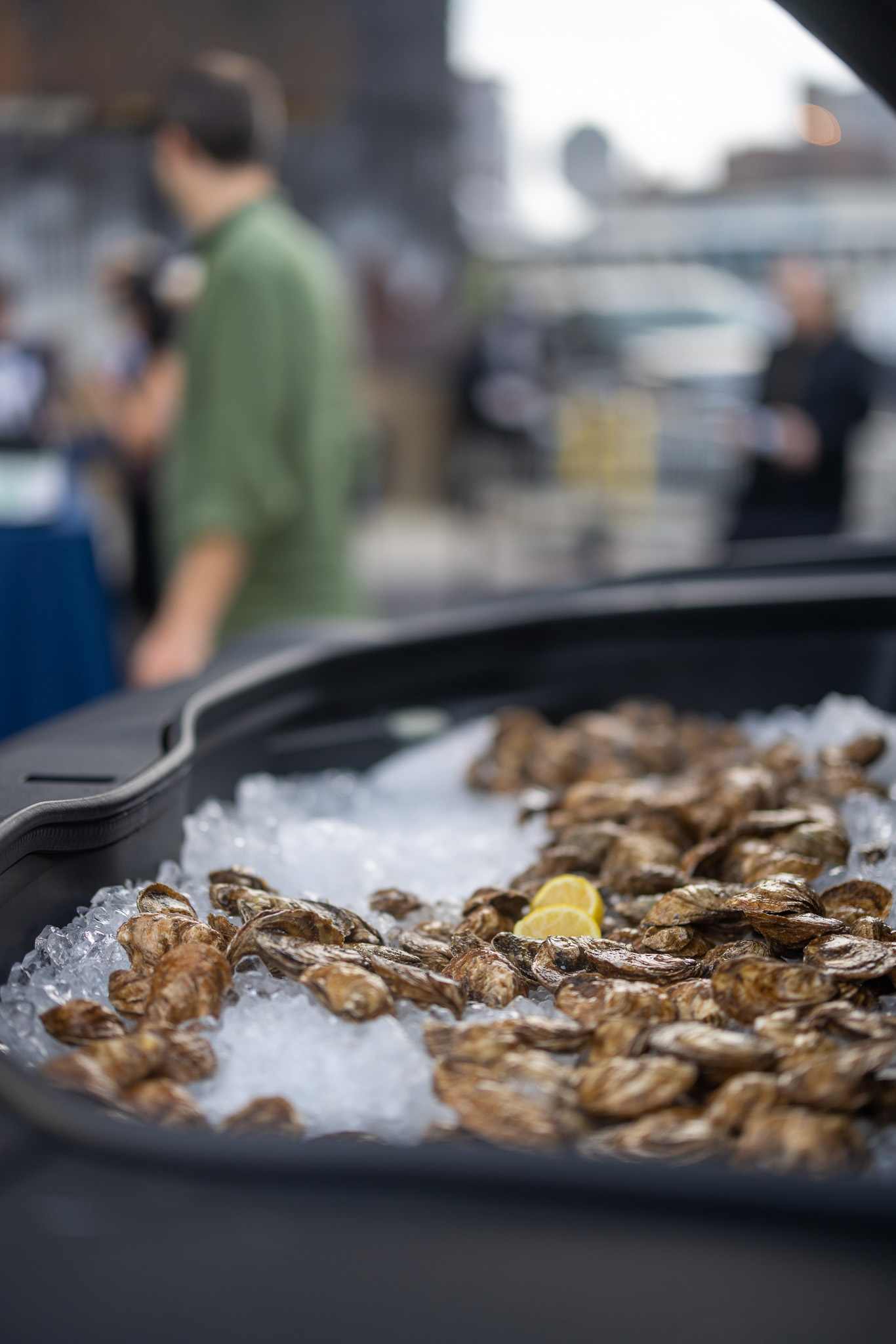
The Billion Oyster Party at Brooklyn’s Navy Yard, known as “the best party of the year,” has achieved somewhat legendary status.
This year, at The 10th Anniversary Billion Oyster Party, there was a lot to celebrate: a decade of hard work from the team and its volunteers, a generation of students with a better understanding of their local ecosystem, the restoration of 122 million oysters and counting toward the goal of one billion by 2035, the cleanest water quality in 100 years, and getting back to being The Big Oyster one oyster at a time.